Monday, October 22, 2012

"A CASE FOR READING POETRY" WEEK 105 QUOTE 105

This is the 6th post in the series  "A CASE FOR READING ....".
"A CASE FOR READING POETRY" is written by Nicky Malcolm.
"The Riches of Poetry
I would describe myself as an enthusiast of poetry with very few real authoritative credentials. I avidly read literature in many forms and poetry is read in spurts along the way. However, the fact is that poems continue to give me great pleasure and I am grateful that they were part of my childhood and education. They satisfy a deep core in me, delight, puzzle, and intrigue me. They present themselves today in many different and surprising contexts. (I consider much 'Rap' to be a form of didactic poetry rather than belonging to the realm of music!) They are, for me, an ongoing adventure! I can take this adventure at my own pace, in my own time, alone, or with others to share in the delightful, indulgent companionship of 'going somewhere special together!'
You will have gathered, by now, that I am a sensualist. Unashamedly so! It is the way God made me! I have a sense of humour about myself! So when Cathy asked me to write a little something about "Why read Poetry?" it gave way to pertinent, pleasurable and playful reflections.
The following are some of the many purposes of poetry in my life.
POETRY IS FUN
Poetry is such a lot of fun! Thank you, Dad, for reading me A.A. Milne: 'When We Were Young' and 'Now We are Six'. The 'bestest' of childhood poems! Now handed down to tickle the fancy of further family generations. Fun should be passed down in the family.
  * Humour is probably the first and greatest introduction to poetry.
  * Start at birth. read aloud, read together, read with a twinkle in your eye.
POETRY AND STORY
Thanks also to my literary teachers who followed this with 'Narrative Poetry'. Oh, the power of story:to sweep us into the past, to share the adventure, the daring deed, the romance, the peril, the tragedy, the passion, the sorrow, the justice, the judgement, the dying breath, the fleeting of the soul.
  * Narrative Poetry captures the imagination at a very young age.
  * Read aloud, perform with gusto, be moved. Put your heart in the telling.
POETRY TRANSPORTS
Thank you to my teachers, and the 'dreaded school syllabus', who introduced me to a whole lot of great poets, some of which I loved and some of which I hated. These poets transported me into their lives and times. I learnt a lot about history and geography, about world views, deities and idols, faith, hope, love-(plus the unrequited kind!), war and peace, changing culture and changing language.
  * My recommendation is pick and mix out of great poetry anthologies to give a taste of times past.
  * Plant a seed of poetic history. It will bear fruit later in life.
POETRY EVOKES
Thank you to the poets I read in school and later life, who evoked their experiences, feelings and moods, with such heightened sensory awareness. They took apart the orchestra and drew attention to the solo instrument. They made me thrill and resonate to the purity of a single note.
  * Read poets who paint pictures with words, using great artistry. They will inspire great motivation, art and ideas in the hearer.
  * For the young, this responsiveness is best tapped into immediately.
POETRY PERCEIVES
Thank you to all the posts I have read who have shared their unique personal views with me through their work, helping me understand that we share a common human bond but are all incredibly different in how we experience, perceive, feel and understand life. This is balancing, challenging, humbling and maturing.
  * This kind of poetry should be read after many warm ups and stretching exercises.
  * This will require a bit of literary muscle.
POETRY AND PUZZLEMENT
Well, yes, now I am a tiddly bit more mature. I am drawn to the 'puzzlers' because they test my comprehension, or, sometimes, they may even choose to offend me! - (I want to work out why!?). I don't have to like these poems, but I have to admire them for some reason, and be intrigued. I do like many puzzling poems. I like a good mystery. I like the inscrutable; I look for the clues. It demands a long association, with paths gone over and revisited again. New gems, new evidence and tantalizingly slow, (in a good way). Why? Because the experience is pleasurable. There are sounds and scenery and sensations to enjoy along the way. Pauses that are ambiguous, (for why??) and punctuation(or not!?-as the case may be). These poems hone a fine sense of curiosity and investigation, and necessitate the development of detection skills and a higher understanding of the poet's toolbox.
However, the experience of poetry should be a well to look in, not a wall!
  * Unless the sense of wonder is there and the reader is working at a higher level of literary skill these poems will confuse or alienate.
  * A good introduction to 'pleasurable puzzlement' investigation so to understand some more obscure contemporary music lyrics. (You may need to make wise choices here!!)
How to Read Poetry
Poetry requires a different kind of reading. It is not a book. It is a sensory experience!
                                     Photographer - Whetstone Chocolates.
When I talk about reading poetry as an introduction to students, I tell them it is like eating a multi-layered sweet. It is not to be crunched, gulped or swallowed whole. What a waste! It is far too special, and , therefore, important to taste and experience every layer. I then describe a beautiful chocolate truffle with a wonderful crunchy, nutty outside layer before you break through to a thin, hard layer of crisp, sharp and bitter chocolate and enter a multi-layered, sweet truffle experience, - culminating in the bitter-sweet centre of delicious liqueur. (There I told you I was a sensualist!) Part of this experience includes the anticipation leading up to it, and, of course, then the enjoyment of the rich after-taste.
In other words, eat slowly! Enjoy the smell, the sight, every texture, each sound, every taste of the truffle and also every response your body and mind makes to each of these things.
It is through 'experiencing' poetry that we learn. We will not learn everything at once, but good poetry is repeatably and pleasurably educating. Our response normally tells us what we have learnt at any given time.
Poets are like painters. They are artists who paint in words. The poetic tools they use are like colours on the artist's palette and their results may range from naturalistic to abstract. The great thing is - 'There is something in the gallery for everyone!'
The Tools that Delight Me in the Poet's Palette
Rhythm, rhyme and repetition. (Essential introductions for the young at heart.)
Alliteration and onomatopoeia. (Sounds lovely!)
Expression, volume, intonation, timing (...and the dramatic pause!)
All poetic genres - (Whoa! So many of them! Ancient, modern, serious and playful!)
Poetic Forms and Rules (Great discipline)
Metre and stress (Tip - Best to leave stress out of it if counterproductive!)
Grammatical naughtinesses are permissible (Yes, great for anarchic rule breakers!)
Punctuation naughtinesses are permissible (Yes, once again, great for anarchic rule breakers.)
Rule breaking in general may be positively, playfully and purposely permissible!!
Word invention (For fun, creative, genius types!)
Comparison/Simile (It's like.... (duh!))
Comparison/Metaphor (The really exciting stuff, painting with words - skill and artistry at higher levels)
Connotation, pun, satire (The clever, witty stuff!)
All of these 'Poetic Tools' are consciously (or unconsciously) used by the poet to engage our 'senses' and 'responses'. We actually use them and hear them everyday in word and music.
The sad fact is that, we are bombarded with sensory stimuli, stuffing figurative fast food down furiously and not engaging with the moment or the experience enough to know if we are engaging at any level of quality. Or - even if we need to engage at all!?
Go on! Try a chocolate truffle, eat slowly and sweetly and enjoy the moment!
You might end up saying, "Cordon Bleu!"
Tips for Sharing Poetry with the Young
Always, choose poetry, 'to enjoy and share', that is age appropriate and using age appropriate tools.
Don't give a child a chainsaw until he can handle it!
Allow young children to respond in talking, reading, drawing and writing after 'a poetry experience' without an agenda. You will discover what 'engaged' them and what they learnt from listening to the poem. 'Inspiration' is a great self-motivator. Expect repetitions, imitations (-really experimentations), and great creations! (These will not all be in word form!)
ABOVE ALL ....
- HAVE FUN!     READ POETRY  and  WORK TO INTERESTS!   WE ARE ALL DIFFERENT!!
Great Poetry Resources on My Shelves
This Little Puffin        Compiled by Elizabeth Matterson        Puffin
Now We Are Six        A.A. Milne                                                 Methuen &Co.
When We Were Young A.A. Milme                                           Methuen & Co.
Lots of 'Dr. Seuss ' books                                                           Collins
Twinkle, twinkle, Chocolate Bar Compiled by John Foster  Oxford
Boy Soup                     Loris Lesynski                                         Annick Press
Noisy Poems          Collected by Jill Bennett                     Oxford Uni Press
Old Poem Anthologies
The best thing you can buy!
I love to collect these and find they are no longer in our public libraries or are out of print. I pick them up in second hand bookshops. They are such a rich resource with something for every age and occasion. They introduce you to a huge history of great poets and great poems.
These are some anthologies I have on my shelves.
My Little Verse and Rhyme Treasury                                             Brimax
The Golden Treasury of Poetry   selected by Louis Untermeyer  Collins
Children's Poetry                        selected by Michael Rosen        Kingfisher
The Oxford Bk of Children's Verse  edited by Neil Philip Oxford Uni Press
Children's Poetry(written by children 1983-1991)
                                             edited by Jennifer Curry                      Fox
The Penguin Book of contemporary Verse  edited Kenneth Allott  Penguin
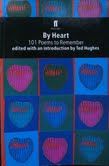
By Heart 101 Poems to Remember  edited Ted Hughes   Faber and Faber"
THISWEEKWITHTHEKIDS~ take the now weekly visit to the library AND second hand bookshop. Make sure you have LOTS of time to spare to look, read, borrow and buy books on poetry. Once home switch off from the worlds and indulge consuming your 'chocolate truffle', as Nicky says, slowly.
Cathy

Friday, October 12, 2012

"A CASE FOR READING PLAYS" WEEK 104 QUOTE 104


This is the 5th post in the series "A CASE FOR READING...." 
"A CASE FOR READING PLAYS" is written by Reuben Turner.
"Why Read Plays?
First up, I should state that I’m not writing about attending performances of plays… obviously plays are written to be performed, however, if your geographical location or finances hold you back from getting to the theatre, how about sitting down and reading a play yourself? Here’s a few reasons why it’s worth grabbing two hours on that rainy Sunday afternoon to read a play.
Plays are an important ancient form of literature. Despite thousands of years passing, we still study, perform and find meaning in ancient Greek plays by authors such as Euripides and Sophocles. Plays, especially the works of William Shakespeare, have shaped our culture, language, opinions and traditions.
Plays can tell historical stories. They may narrate the lives and tales of real people, often well known historical figures of their day. They also provide a window on the culture, society and notable events of the time period in which the play was set and written.
Pushing boundaries has always been a huge part of playwriting. Historically, plays have generally been edgy, interesting and controversial. Playwrights aim to break new ground and upset or question social norms. Some plays such as Lysistrata have been
banned time and time again over the two and a half thousand years since it was written. Indeed even fairly well known plays such as The Importance Of Being Earnest by Oscar Wilde and Shakespeare’s The Merchant Of Venice have been banned at one point or another. If you want to read something edgy and challenging then how about a play!
Plays are short. Some people love tucking into the one thousand pages of a classic novel, yet many of us just don’t have the time or energy to make that commitment. A play is an engaging read, which may easily be started and finished within a couple of hours.
Generally a play is designed to capture an audience’s attention and hold it over the course of a few hours. Plays are a highly immersive, descriptive and ‘pacey’ read. While reading one may not be as powerful as seeing it performed, it will still be highly engrossing!!
So what play(s) should you read and where would you find them? In answer I would ask how often we see a great movie then buy the book its based on… many films started out as plays, why not give one of them a whirl? Or maybe you enjoyed a performance of a play in the past or studied it back in high school… how about reading it? Having
a mental image or a little knowledge of what’s happening in a play, I find helps me to understand and enjoy reading it. Plays are cheap to purchase online through websites such as thebookdepository (which ships free globally), trademe (New Zealand) or abebooks. Otherwise your local library or second hand bookshop is bound to have a section devoted to them. A few plays I have enjoyed or found to be interesting reading recently have been:
The Importance Of Being Earnest (Oscar Wilde), 

A Streetcar Named Desire (Tennessee Williams), 

Our Town (Thornton Wilder),

A View From The Bridge (Arthur Miller).
THISWEEKWITHTHEKIDS~ investigate the bookshelves at home or the library and enjoy a reading a play.
Cathy


Tuesday, October 2, 2012

"A CASE FOR READING CONTEMPORARY LITERATURE" WEEK 103 QUOTE 103.

This is the 4th post in the series "A CASE FOR READING....".
"A CASE FOR READING CONTEMPORARY LITERATURE" is written by Kevin Quigley.

"I have always been a reader.
As a child I was always in the middle of a book. I just loved the act of reading. And when reading was unacceptable, say, at the dinner table, or impracticable, like in the shower, there were always the words on a ketchup or shampoo bottle upon which to focus my attention. It often didn’t even matter whether the words were once upon a time or sodium laureth sulphate. They served as a distraction: for however long I concentrated on them I would forget about the world around me.
The real escape, however, would occur after lights out when, night after night, I would reach for my torch, tent myself under the duvet and find - or rather lose - myself in fictional worlds. In a childhood which was far from idyllic, these worlds – whether better or worse than my own – were not only comforting, they were crucial.
And now, decades later, they remain as necessary as ever. And not just as a means of retreat from this world and its imperfections but also as a lens through which to see it more clearly, or indeed as a mirror in which to get a better look at myself, ourselves.
No-one, of course, would deny the power of classic literature in this regard. But what of contemporary fiction? Is it worthy of our time and attention?
Somewhat predictably perhaps, my response is yes. In this media-addicted, celebrity-obsessed world, good literature provides not only an oasis from but an antidote to the shallowness and asininity of much of contemporary culture.
We live in a world where our ever-decreasing attention spans seem increasingly to dictate how we spend our leisure-time: surfing the internet, flicking through TV channels, glancing through magazines. Even the verbs in that sentence resonate with non-commitment and disinterest. Read, then, as a bulwark against the daily deluge of soundbites, tweets and texts. The pleasure derived from immersing oneself in a good story will last long after the last page. It’s been a year, for example, since I read Rohinton Mistry's 624-page Indian epic A Fine
Balance but elements of his tale still haunt me.


We live in a world where language is no longer sacred, where words are solely used in the service of advertising or as vehicles for appalling plots in appalling potboilers. Read, then, for the sheer beauty and possibilities of language. Relish every word, every turn of phrase in The God of Small Things by Arundhati Roy, savouring it all the more in the knowledge that the author never wrote another novel.

Not only are plots often as thin as the paper they’re written on, so, all too often, are the characters. But there are, thankfully, authors whose creations are so vivid, so complex, that they will, by turns, infuriate you and endear themselves to you. Read, then, to encounter such characters, and find yourself reflected in them. You don't have to have read Virginia Woolf to appreciate the depth of emotions experienced by the three female leads in Michael Cunningham’s splendidly lyrical The Hours.
We live in a world dominated by Hollywood, where ideas and narratives are recycled and reused in order to make a quick buck. Films are made and remade, and novels are never published without the possibility of a film somewhere down the line. Read then, to discover something original, for the joy of what-happens-next? Pick up a book about which
you know nothing, like I did with The Other Hand (also published in some countries as Little Bee). The back of Chris Cleave’s second novel says it all: ‘We don't want to tell you too much about this book. It is a truly special story and we don't want to spoil it.'
There are many more books I want to tell you about but I would rather let you discover what’s out there for yourself. The next time you're looking for something to read, think about reading someone who is still writing today. Maybe consider a novel set in a country you know little about, or on a theme in which you've never taken an interest before. Settle yourself in and enjoy that on-the-verge-of something-new feeling that you only experience as you begin the first chapter."
THISWEEKWITHTHEKIDS~ choose to make another visit to your local library, or if you're lucky enough to have a good second-hand book shop nearby, spend a few hours reading and browsing. As a family we do this each year when camping as there are 2 great second-hand book shops close by. I like the suggestion to read the work of an author still alive, or an a theme that you know little about. I agree that it is good to read outside your own experience.
Cathy


Friday, September 28, 2012

"SEPTEMBER : EAT ECONOMICAL. HEALTHY, TASTY AND SEASONAL" WEEK 102 QUOTE 102

 
 "With some produce - think kiwifruit - it's a well-accepted habit to discard the skin. With others - carrots and potatoes are prime examples - you can definitely eat the outer layer but many of us take the peeler to them anyway. However, research shows that, for the sake of your health, eating fruit and vegetables whole wherever possible is a smart move. 'Take apples', says accredited practicing dietician Alison Graham. 'Like many types of fruit and vegetable, the skin is where a lot of the nutrients are most concentrated so eating the whole fruit is definitely best'."
 Karen Fittall : "Peel Appeal". New Zealand Good Health magazine August 2012
  SAUTE BOK CHOY  (Just over 25 mins to prepare and cook)
Serves 5 adults.
The nutritional benefits of the combined ingredients in this dish provide a rich source of Vitamin C and K, selenium, potassium, manganese and B complex vitamins.
Health benefits from these ingredients include reducing blood pressure and heart disease, cholesterol levels, nausea and lowering the risk of infections, migraine and diarrhea. The ingredients of this dish will also assist in digestion, cancer prevention, good bone and nerve health and hair and skin growth.
My recipe is based on the Australian Women's Weekly "Stirfry Choy Sum" recipe in the book "Vegie Stars"
My recipe is HOT in flavour, but if you prefer a milder dish just reduce the ginger and chili quantity by half and the garlic to 2 cloves. I'm sure you will find the taste perfect for an average palette.
INGREDIENTS:
2 Onions
3 packets of Bok Choy (6 'bunches')
a generous slurp of Olive Oil
2 Red Chillies
3 Garlic Cloves
5cm Root Ginger
2 Tbsp Soy Sauce
Juice and Zest of 1 Lemon
300g Cashew nuts
2  2/3 cups Rice
PREPARATION AND COOKING:
1. Put Garlic cloves into a mortar and pestle and give them 2 - 3 hits to split their skin. Now they can quickly be peeled.
2. Wash chillies and slice green top off. Slice through the middle lengthwise and remove the seeds. Tear into pieces and add to the mortar and pestle along with the piece of ginger and garlic and smash it all up until they are pulverized. The aroma from this is DELICIOUS. You can get your kids to do the muscle work here but warn them that all 3 ingredients have juice and as they smash them the juice can easily squirt into their eye and it will sting!!
3. Peel and slice the onions.
4. Put a generous slurp of oil into a large frypan set at a low heat. Add the onions and put on the lid to let cook until you finish the next step.
5. Pull all the leaves off the Bok Choy and wash in the sink. I tear the leaves lengthwise irregularly - you can use a knife to slice them if you prefer.

6. Remove the zest of 1/2 - a whole Lemon. I used 1/2 of a Lemon.
7. Add the Lemon zest and the chili, garlic and ginger mix to the onions in the frypan. Cook for 1 min with lid on.
8. Add Bok Choy and with tongs keep moving the leaves around in the pan so all ingredients are mixed together. Lid on and cook 1 min.
9. Add Soy Sauce and Lemon juice and again use tongs to move the mixture around. Lid on and let cook 2 min.
10. Add Cashew nuts and mix through using tongs. Lid on and leave for 1 - 2 mins.
Serve straight away with cooked Rice.
 KIWIFRUIT CRUNCH   (30 - 35 mins to prepare and cook)
Serves 5 + adults.
In this recipe I am NOT "discarding the skin" of the kiwifruit, which makes it quicker to prepare and once cooked the texture and taste is great. 
Nutritional benefits. Green and gold Kiwifruit are the most nutrient-dense of all fruits. The ingredients in this dessert offer great stores of vitamin C, potassium, magnesium, manganese, fibre, calcium and iron.
The benefits to health that these ingredients give, include maintaining a strong immune system, assisting in digestion, the prevention of bowel cancer, heart disease, asthma and encouraging good healthy skin. The ingredients also help maintain weight control, lower cholesterol, stabilizes blood sugar, are an energy provider and help reduce anxiety.
INGREDIENTS:
12 Gold Kiwifruit
1/4 cup Sugar
1 Tbsp Sugar
1/2 - 1 zest of Lemon 
1 juice of Lemon 
1/2 cup Coconut
1  2/3 cups Oats
1/4 cup Sesame Seeds
150ml Cream
PREPARATION AND COOKING:
1. Measure the oats, Coconut, Sesame Seeds and 1/4 cup Sugar into a bowl for the crumble topping over the fruit.
2. Wash the Lemon and remove the zest with a zester and add to the bowl.
3. Use your hands to knead the ingredients together.
4. Butter a large flan dish (I used a 28cm flan dish)
5. Wash the Kiwifruit and then slice up (DON'T peel) arranging in the flan dish. It doesn't matter if your Kiwifruit is a little soft.
6. Sprinkle 1 Tbsp Sugar over the Kiwifruit.
7. Squeeze juice of a Lemon over the top.
8. Put crumble topping over the Kiwifruit.
9. Bake 15 - 20 mins at 180*C fan oven.
10. Serve with liberal pourings of Cream.
TOTAL COST OF THIS MEAL TO FEED 5 ADULTS = $19.11NZ. All ingredients were bought at Pak'n Save Albany, Auckland New Zealand, Wednesday September 26, 2012, EXCEPT for the Bok Choy which was bought at New World Albany, Auckland New Zealand, Thursday September 27 2012.
I have not included the cost of "a generous slurp of Olive Oil", 2 Tbsp Soy Sauce, 1/4 cup Sugar and 1 Tbsp Sugar.
While preparing the meal I found these fascinating artsy images to enjoy. Look out for yours as you prepare your meal.
 THISWEEKWITHTHEKIDS ~  happy cooking.
Cathy

Thursday, September 20, 2012

"A CASE FOR READING BOOKS FROM THE CLASSICS " WEEK 101 QUOTE 101

This is the third post in the series "A CASE FOR READING..." and is written by Johanna Cettina.

"Growing up in a home where books were readily available and reading was encouraged, I always had my nose in a book. Naturally, as my reading tastes developed and my desire for more challenging and exciting stories grew, I turned to the classics. Well I remember shivering with fear as Jane walked with candle in hand through the dark and mysterious halls of Thornfield in Jane Eyre. Laughter escaped my lips as I pored over the illustrations of Mr. Bingley’s unusual attire in Pride and Prejudice, and I puzzled over the complexities of nineteenth century social conventions. As a student reading Thomas Hardy for the first time, I was filled with indignation at society’s treatment of the ill fated Tess in Tess of the d’Urbervilles.


Over the years in search of something to read which both stimulates and
engages the whole mind, I have returned to these now familiar pages again and again. Each time I make new and exciting discoveries, uncovering layers and depths which I had not seen before.
So why do the classics have such lasting appeal? Why are they a ‘must’
read?
The classics have stood the test of time because they are some of the best literature ever produced by some of the greatest writers we have ever had. Their endurance is a testimony of their artistic merit and place within the greater literary tradition. The classics have appealed to people across the ages because their stories and characters are timeless as they deal with universal themes- ideas which we in the 21st century can identify with and see in our own society too.

The classics also portray human nature at its worst and its very best. We meet characters ruled by pride, greed, ambition and selfishness and in them we see mirrors of ourselves. We are also inspired by characters that stand up for the oppressed, fight against injustice and do what is morally right. The classics offer us a host of such individuals.
Admittedly, for some, picking up a classic to read can seem a daunting task at first because of the language. It can feel as if you have stepped into a completely different world. However, if you persevere, you will be enriched by the experience. Your grasp of language will expand and you will have an abundance of ways to express your thoughts and feelings.
For the reader who has never read a classic I would recommend one of the following: A Christmas Carol and A Tale od Two Cities by Charles Dickens; Treasure Island by Robert Louis Stevenson; Jane Eyre by Charlotte Bronte; Pride and Prejudice by Jane Austen.


Happy reading!"

THISWEEKWITHTHEKIDS ~ you could have another trip to your local library to borrow one of the classics. If you live near a second hand bookshop you are bound to find plenty of classics for sale at very reasonable prices.


Friday, September 14, 2012

"A CASE FOR READING BOOKS IN THE ARTS" WEEK 100 QUOTE 100

This is the second post in the series "A Case for Reading...."
"As a girl I hardly ever read. I got through English at high school with my gorgeous sister, Jules, reading my novels and plays, then in her flamboyant manner talking me through each equipping me with quotes and all that was needed to get through the system and into arts school.
When I became a mum and began teaching my children I read, often for the first time, poetry, plays, classics and fiction, history, biographies, books on science, sport, travel and the arts, and I found I really enjoyed it.
FIVE REASONS FOR READING BOOKS IN THE ARTS ~ 
1. The first is because art is everywhere. It's seen in a sunrise, the arrangement of food on a plate, design  or layout of a room, the cut and make of a jacket, a magnificent garden, a tattoo design on flesh, a fruit and vegetable display, a fancy hairstyle or an exotically made-up face... Art is not confined to the art gallery. 
To live life oblivious to art seems as crazy as eating food without tasting it.
In my late teens I first read "Hidden Art" by Edith Schaeffer, which speaks of this view point, that art is everywhere and can be found in everyday areas of life.
2. The second reason is because art shows us how other people live. When I was at school one of my art teachers, who was a dragon, regularly referred to Kenneth Clark's book, "Civilisation ". She would hold the volume in her hands as she walked, reading and then talking to us in an animated fashion as though she had suddenly come alive. Decades later I bought the "Civilisation" series when they came out on DVD and now understand what a treasure my education was under Miss White. Lord Clark's book "Civilisation", traces the rise and fall of European civilisations through looking at the art each created. Art through history gave the true story of people's lives.
3. The third reason we should read books in the arts is because art shows us other people's perspective and experiences of life.
Through art, an artist shares with the world how they feel, what they see and think. 
In the well known painting "The Cry" or "The Scream", Edvard Munch clearly shares with us the tension, anguish and extreme loneliness and isolation he felt. The colours, lines, composition and subject are simply tools to express a sound. We see the sound which directs us explicitly to the emotions he sort to communicate. 
You may say, this is all fine, but I know what art I like and frankly I don't need to look at let alone read about art I dislike. Justin Paton in his humorous/serious book "How to Look at a Painting", suggests we look at as many paintings as we can and collect up an "image bank" of "remembered paintings". I agree and think the more art we see and read about by artists with different perspectives and life experiences to our own, the wider our compassion and understanding of people and life becomes. Paton says, "At any one time, the amount of average or downright wretched art exceeds the other kind by an alarming ratio. If an artwork's giving you nothing, there's no shame in turning your back. Remember, though, that if you don't occasionally wade through art's lows, you're hardly qualified to register the highs."
4. The fourth reason is because art is inspirational. Edith Schaeffer in "Hidden Art" says, "One area of art inspires another area of art, but also one person's experience of art stimulates another person and brings about growth in understanding, sensitivity and appreciation. One active artist gives courage and incentive, and germinates ideas in others for producing more art. Hence a poor, humble or unknown artist might easily provide the spark which kindles the fire of a great artist." 
I find this stimulation all the time. My mind is set off with ideas to write about, craft projects to start or I get a general feeling of being 'fed'. Then I feel as Edith says, "satisfied and fulfilled".
Two artistically inspirational books which had this effect for me, were, Victoria Finlay's "COLOUR, Travels Through the Paintbox" and "BURIED TREASURE, Travels Through the Jewel Box".
5. The last reason I think it is important people read books in the arts is because "Great art changes you". This quote said by art commentator, Sister Wendy Beckett, who is well worth reading or watching on DVD. Here's a link if you wish to read about her.
Sister Wendy's full quote is "The experiential test of whether art is great or good, or minor or abysmal is the effect it has on your own senses of the world and of yourself. Great art changes you."
If we adopt Sister Wendy's method of spending a prolonged time looking at a painting, she says we gradually see things we didn't find at first. This time slowed thinking and pondering can often bring change to how we view the world or see ourselves."
THISWEEKWITHTHEKIDS~ inquire at your library if they have or can get in for you, Sister Wendy's DVD series or Kenneth Clark's (more suitable for teenagers and adults), or borrow one of Victoria Finley's books to be taken on an exotic, fantastic journey to places, people and cultures that will inspire.
Cathy


Wednesday, September 5, 2012

"A CASE FOR READING BOOKS" WEEK 99 QUOTE 99

This is the first in a series of posts to encourage adults and families to take up the challenge and read books from a wide range of genres.
The idea came from an article by Virginia Woolf, "Why Do We Need to Read?"Part 1 and "Why Do We Need to Read?"Part 2, where she suggested reading from many areas and disciplines to give our mind plenty of material to work with.
WHAT ARE YOU SPENDING YOUR TIME READING?
Today we live in a world of absurdity in relation to reading the written word. On one hand there are people that are besotted with spending hours each day reading material which expresses the tiniest feelings and fancies  through digital media. On another, we are presented with an avalanche of technical data or 'terms and conditions' that we are supposed to read before we can place our short comment or buy a ticket on many online sites. And then there is the concerning statistics to do with the level of reading competency, not only of children but also adults throughout the world today.
However many people remain passionate about reading books, and my hope in this series is that these posts will have an effect on our attitude to reading, bringing a balance and an influence of 'normality' to the communities in which we live.
The question - "What life changing book have you read?" was put to Sir John Kirwan. Here is his reply ~
"I read constantly. Books are my soul food and one of my tools for getting away. I remember going on tour with (former All Black coach) Wayne Smith and I'd never read a book before. He said, "JK, it's time you read a book." So he gave me THE PALADIN, about Winston Churchill's personal spy. I read it in a day and I've never stopped reading since. It changed my life. I don't know what I'd do without books. I have and iPad but I've gone back to that touchy feel y thing of books. I like that. When I buy  a book, I write the date and what's happening right then, what I'm feeling or what's happening. So there are these books in my library with notes on the inside, like, 'Got contract to coach Japan.' "
From NZ Herald Thursday July 19 2012. Twelve Questions section.
What a great story of an immediate change and wholehearted commitment to reading books! 
FINDING WHAT TO READ.
 * If you are not a reader or always read the same sort of books, start by choosing a new area that is attractive to you. 
 * Ask friends what they like to read and which books in particular they have enjoyed. 
 * Your local library probably has tons of books you would enjoy but have no idea exist. So go for an hour to browse the shelves or ask a librarian which books they would recommend in a particular area.
 * A trip to a bookshop to wander and browse can be helpful, even to watch what other people are picking up/buying.
 * Some online bookstores and reality bookshops have a Top 10 or Most Popular list. This may be a good place to start to broaden out your reading diet, but I am loathed to suggest following such lists, as reading like our taste for food or music, is individual, and it's important to develop our own senses in what to read next. 
 * Many newspapers and publications review an assortment of books.
REASONS FOR READING.
 * Like John Kirwan, some people love reading books to remove themselves from their present circumstances, and have, as my husband calls it, a holiday. 
 * Others, again like John Kirwan, find reading gives them "soul food", feeding their heart and mind, connecting with who they are. 
 * The need to stay up to date with current thoughts or information is another reason people read books.
 * To satisfy one's curiosity or inquisitiveness often causes people to get reading.
 * Whatever your reason is to choose to read a particular book, a book  must stimulate thought or imagination and feed your mind. It may make you laugh or cry, or bring a wonderful new dimension to leisure and relaxation as John Kirwan found.
THISWEEKWITHTHEKIDS ~ go for a trip to the library to borrow some books from sections of the library you have not borrowed from before.
Cathy