Tuesday, October 25, 2011

LESS QUANTITY, MORE QUALITY COMMUNICATION WEEK 59 QUOTE 59


"It seems that current technology is about quantity over quality and that, having communicated via text or email, the communication needs have been met. But I would say that they have been met only in the clumsiest, most expedient way. It's like substituting a greeting card for a heart-to-heart talk. Sure, we can have more frequent episodes of communication, but perhaps they are at the expense of deeper, more meaningful pieces of communication. I see this in my own life....I have contact with my friend via facebook and email, therefore I feel like I am up-to-date on what is going on in his world when I most certainly don't. Absent these expedient communication devices, I most likely would long ago have called him to find out how he is and would have spoken more in depth with him, strengthening our friendship rather than keeping it as surface as it is with, say, my bank teller."
Viewer's comment on www.ted.com 
"What I find weird is when you chat with someone online then you see them in person and barley say a word - something about that doesn't seem right." 
Alex, 19  
Both quotes from the book "CONNECTED: You've Upgraded the Technology - Now Upgrade the User" by Attitude. 


In this post I will repeatedly be quoting from this book, indicating it by *. At $15NZ, this recently published book is easy-to-read, humorous but has challenging comment. It is a must for  every household with children approaching teenagehood right through to adults who are involved with online-living. "Connected" is the fourth in a series by the Attitude group. I referred to another in the series, an excellent book on sex education for teenagers, in "What Sons Need from their Dad's" Week 19 Quote 19 and "What Daughters Need from their Mothers" Week 25 Quote 25
The ability to be able to action an idea immediately, send a detail now, 'speak' to hundreds in a minute, receive their replies the next minute, is just an ordinary everyday convenience that technology now supplies us with. To school and tertiary aged students, this technology is normal life. Along with teenagers, many adults too, freely admit to the usefulness/compulsion, in being in the habit of hourly checking their Facebook, Twitter, blogs, emails, making sure they're not 'missing out' on something. 
The majority of children are growing up into a technology dominated life, which brings with it  both a positive and a negative side.
"I realised I needed to spend less time on Facebook when all I could think of when I was out was getting enough cool photos to upload that night" Jeremy, 16.*
"Mobile phones have become such an extension of us that people actually now have 'Nomophobia': a genuine fear of being without it. It is mainly found in teenagers (surprise surprise!)who consider not having a phone 'social death'. How can they text their mates, put updates on Twitter or check their Facebook while on the go?" *
"A young guy from Morrinsville, Waikato was getting a piercing and feeling a little nervous. he asked the guy doing the deed if he could get his phone - he wanted to hold it for comfort!" *
"DANGER! A 2006 survey by Virgin Mobile reported nearly 4 million people in the UK reported numbness or pain in thumbs, fingers or wrists from texting and related injuries!"*
"Zombie kids' are teenagers sleeping with their phones. That is how much they love them. One dad confiscated his daughter's phone just before she went to bed. He had it in his room and it was receiving messages all night! The last one was at 4 am. Again, maybe, just maybe this is getting a little obsessive. A 'technology holiday' - a complete break from your information and communication technology - can help you get control on your life. If that idea terrifies you then you definitely need one." *
"Virgin Mobile Canada survey found that nearly one third of young people spend more time on their mobile phones and surfing Facebook than with their partners." (www.virgin.com) *
The obsession difficulties, the inability to assess when enough time has been spent with technology, is not only evident in teenagers lives. Parents too are often 'glued' to the screen. If this is you, it could help to have a careful think through of the facts and statistics that prove that the parent who is an alcoholic, illegal drug offender of sex abuser, regularly passes on their negative habits to their children. Your high priority to technology is not just seen by your kids (regardless of age), but you also are presenting it to them as normal life.
"Addiction: the state of being enslaved to a habit or a practice or to something that is psychologically or physically habit forming." *


Time allocation to technology is one issue, but another, possibly more serious question is, if our main form of communication is via technology, are we going to be affected as children growing up, or as adults, in how we relate relationally to each other?
"I read some status updates from a friend who was overseas having a blast. However, when I spoke to him when he got back, he told me that he had a terrible time and was really depressed. It's interesting how deceiving Facebook can be." - Dave, 24 *
I had a similar experience this week through texting someone close to me. I knew she was undergoing some medical tests and I asked about the results. It wasn't until 2 days of texting with her that I detected something was not right, and then found out her results were most unhappy ones.
"In person, face-to-face, you can see a lot more about who people are deep down. When they talk to you, you can get a lot of information from the way they dress, the way they present themselves, their body language, their tone of voice - you can tell a lot. It may add to what they say with  their words, or even contradict it. If you ask your friend, "How are you?" and they say "I'm fine, thanks!", but you notice they have tears in their eyes, dirt on their clothes and arrows in their back, the 'non-verbal cues' give you even more information than the words. Online all you get are words ... and maybe a corny emoticon or two." *
"A UCLA study indicated that up to 93% of effectiveness in communication is determined by non-verbal cues." (www.scribd.com) *
"As SMS shortcuts and chat room acronyms create a new textspeak, an entire generation may be losing out on vital conversational skills, such as non-verbal information gathering, not to mention the ability to listen instead of merely expressing something." ("Art of Conversation" Voyeur. March 2010.) *
Recently a friend told me that her daughter, in first year university, has hardly gone in to lectures and tutorials all year. She gets what she want of the course online from home.
The concern is that if we allow technology alone to be the primary medium through which  a student learns, or personal relations with others are conducted, we miss out on vital aspects of communication. Vital aspects such as  
        ~  perception and sensitivity of private emotions. The lose of these skills takes us closer to the robotic, machine-style human that some movies love to lead us to believe we are all heading to become.
        ~  conversational skills. As David Smiedt rightly says in his article at realviewtechnologies , conversation is not just the exchange of data, it involves a person's personality, gauging of impressions and so much more. He speaks of the growing trend in the US for 'conversation parties' where technology of all forms is banned.    Susan Greenfield, neuroscientist at Oxford University, spoke to the House of Lords on the ability of social networking to "reconfigure the way a child's brain works by 'infantilising' it, symptomatically eroding their attention span and sense of identity .... [Nicholas Carr, who I referred to in "Should the Screen be My Child's Play Pal?" Week 33 Quote 33, makes the same point] .... social networking was 'devoid of cohesive narrative and long-term significance' - two factors that are hallmarks of the best conversations." Berra makes the point that the average British teenagers uses 'an average limited linguistic range of just 800 words a day - significantly less than the 40,000 words a 16 year old should have at their command...... UK Government-appointed communication Champion, Jean Gross (said), 'Eight hundred words will not get you a job.'
      ~  listening abilities."....teaching children listening skills is one of the most important traits we as adult human beings can help (children to) develop ...... from academic and real world success to becoming a friend and experiencing true friendship." What is needed is that children actively in an intentional, engaging way, listen. The writer of "Little Ones Reading Resource", suggests the skill of proper listening, as they describe above, happens through children being regularly read to  - Teaching Children Listening through Reading.     Again, referring to my post "Should the Screen be My Child's Play Pal?", Nobel Prize winning neuroscientist Eric Kandel, developmental psychologist Patricia Greenfield and a Stanford University research group, comment on the damage to attention and concentration skills that over technology use, permanently gives to people of all ages.


FIVE HUMAN ASPECTS OF COMMUNICATION WORTH PRESERVING ~
" + Expression.
The human face is capable of hundreds of subtly different emotions. You would have to be incredibly clever with your words to communicate through a keyboard all the emotions we can express with our face and body language. Even if you use smiley faces.
A strange things happens to babies born blind. At first, they smile as much as sighted babies, which makes us smile back at them. But, because they can't see our smiles, they eventually stop smiling, and tend to have 'blanker' faces than sighted people. This could happen with people who have an extensive online life. They have rich emotions, but they don't get the visual feedback from the people they are interacting with. Interacting on a computer, we are blind to the feedback....unless you are using your webcam.
  + Touch.
Of course touch can be sexual, but it can also be sensitive, friendly, reassuring and very genuinely loving. So far, you can't do that over the net.
  + Pheromones!
Love is a wonderful thing - we like to hear their voice, see their image, feel their touch...and there is still enough animal in us humans to say that it can be incredibly moving to smell them. We all give off natural scents called pheromones which, even though they can't actually be identified as smells, trigger a sense of attraction in another person. My computer smells of plastic and spilt coffee. It does not attract me. [I first heard of Pheromones when researching for a post last year "What Do Daughters Need from their Dads" Week 16 Quote 16 - the effect of a biological father's pheromones on his daughter's entry into puberty, is incredibly fascinating.]
  + Being Human.
We are physical beings and social creatures. Computers might provide a wonderful 'extra' to normal relationships, and they might even be a reasonable substitute if we can't get together, but as humans, our best times are when we get together - enjoying each other's noise, smiles and company. Parties, sport, eating together and spending time together are always going to beat hanging around a website.
  + Being Confident.
Being with people teaches us how to relate. There are always going to be times when you have to take your body along to real physical situations - job interviews, for example. Computers might be great for shy people, but to actually overcome social shyness, you do need to mix with other people offline." *


Returning to the quote at the start, the more frequently used communication methods of texting and emails, are often communicating "at the expense of deeper, more meaningful pieces of communication."


THISWEEKWITHTHEKIDS ~ Do you and your kids need to even up the balance of time spent in physical person conversation with what's spent communicating through technology? Enjoy a chat with someone right now!
Cathy


Monday, October 10, 2011

FAST-PACED LIVING!! WEEK58 QUOTE 58


"Time poverty is now a recognized psychological and social stressor. In a speeded-up, highly complex society, there just isn't enough time for everything: our demanding jobs, our interlocking bureaucratic responsibilities (taxes, insurance, legal issues), our loved ones, kids, our community (including the rest of nature), plus commuting and keeping up with traditional media and endless 24/7 online communications. Constantly rushing to keep up as we inevitably fall further behind, we find ourselves destroying not only our own health, but our habitat, and the habitat of the people, plants and animals with whom we share the planet. ...... many (of us) feel - completely frazzled and out of synch with our deep selves."
"SLOW DOWN: How Our Fast-Paced World is Making Us Sick" : Linda Buzzell. AlterNet. July 2009.


For weeks now I have been involved in a continuing conversation. It's been going on with friends, people I hardly know and last Friday at my back door, it was with a woman who was a total stranger. I know her name is Leah, that she is in her mid thirties and has a nine year old son. It was our blackboard in the hall just before you reach our backdoor, that sparked this particular conversation. Leah began by saying she really liked what was written on the blackboard. We then stood beside her car discussing deep feelings and frustrations of when one person wants to slow down their crazy living pace and take a "stop and blob" holiday, but their partner can't find time for that. For her partner, work was a high priority and time-consumer.
Erin on her blog "Raising Country Kids", wrote a post "Slowing Down in a Fast-Paced Life", and said, "Lately, though, I have begun to wonder if we're falling into the trap of society that requires us to need everything faster, better, and more expensive in order to be satisfied." She went on to describe how different life for her as a child was compared to now - "When we defrosted meat, it wasn't in a microwave, we planned ahead. We didn't reheat leftovers in a minute and 30 seconds, we waited for them to heat up on the stove or in the oven, and in the meantime we sat down, conversed, and relaxed. While the convenience of the microwave saves time, it is another example of our apparent need four instant gratification, and it also creates frenzied mealtimes because we know that we don't have to plan ahead. ....... The unfortunate consequence to this phenomenon is that we are losing connections with each other even as we think we are connected. For example, the people who are on the phone constantly often have bored-looking children trailing after them. There is no interaction with the children, no sharing of an experience together, after all, whoever is on the phone is clearly more important than the child. There is no smile and greeting when you meet someone on the stairs because they are too busy talking on the phone to notice your presence. There is no 'getting away from it all' because we are so intent on taking it all with us all the time.
I'm not sure where the line is between something that is a convenience for us and something that inconveniences us."
It is clear why we feel "completely frazzled and out of synch with our deep selves".
Everyone knows that living constantly under "unnatural time pressures" can easily lead to physical illnesses, social and psychological disorders. 
These days it seems everyone says their lives are too fast/they have the feeling they are living on a rollercoaster/they never have enough time to think - breathe - sit down to relax - floss their teeth - enjoy a coffee or life. But the essence of living hasn't really changed at all.
   ~  there are still 24 hours in a day and 7 days in a week
   ~  we still live in families and need to eat drink and sleep to survive each day
   ~  we still like to laugh, cry and get excited regularly
   ~  we still hope to improve certain things about ourselves and improve our living situation 
       before we die
   ~  we still have a curiosity about this world and would like to know and experience more of it
Nothing is new, life has always been full-on and pressured. It was this way for the slaves who built the pyramids in ancient Egypt, the peasant surf farmers of the medieval times, the barbarian invaders who entered Europe, people living at the time of the Industrial Revolution in London, and still today.
Today there are various expressions of frenetic lifestyles. Some are merely due to the choices people make and hence a choice to change, could be made.
But if you choose to continue living in your frenzy, here's some helpful ideas you would do well to incorporate into your lifestyle. They are simple ideas which the people of the past probably practiced and so 'survived' their seriously stretching lives.
I think four of Linda Buzzell's suggestions in her article are sensible and able to be applied to most people's lives.
1.  Reconnect with place - settle in a place you find comfortable. Spend regular time there, exploring it, being in it and continuing to get-to-know the details of that place. We are privileged to be able to regularly go out to our family bach or holiday house, which is in a picturesque valley on the water. It is simple, has no telephone  or internet connection and very poor mobile coverage, but is warmly welcoming, rich in family memories and offers generous experiences in 'living' when we stay.
2. Reconnect with animals - caring for animals or pets involves touching them, holding them which gives pleasure and joy to the carer. Even watching the flight of birds through the sky or moving from tree to tree, gives a person time to slow down, be still and quieten down. My husband loves to be with our cows. My son loves caring for his chickens
3. Reconnect with plants - enjoying nature is easy - a small plant growing on the windowsill or a tree you pass by,  if closely observed can give your imagination a lot to think about. Pick up a leaf from the ground and hold it, look carefully at it because it is a unique speciman. Smell the fragrance of a flower, that too is a unique perfume. As they say, " take time to smell the roses".
4. Spend time in wild nature - this needs a length of time rather than a moment. A long slow walk along a beach or through a forest, sitting at the beach watching waves crash on the rocks, walking in a storm of heavy rain and wind. Experiences where there's no space to chat on a phone because you are absorbed in silence, fully focused on feeling, listening and seeing. Our annual holiday camping simple style is full of such occasions, cyclones and all, giving great opportunities to be slowed down and refreshed before returning to normal busyness.
The photo above of our blackboard, is a great quote by Ann Voskamp "The slower the living, the greater the sense of fullness and satisfaction."
Here's another from her, "Rest time is not lost time; rest time is what gives meaning to the rest of time." In this quote she states a misunderstanding that some people, like Leah's partner, have with 'rest'. For some it is thought that rest is a waste of time, unnecessary and even irresponsible. Movies have picked up on this theme with it often resulting in parents choosing to have no time for their children ~ Audrey Hepburn's "Roman Holiday", James Dean's "Rebel Without a Cause", "Stick It", "Cheaper By the Dozen", "She's the Man".
But rest IS significant as my musical sister reminded me. In music a rest is not nothing! It has purposely been put in its place by the composer. It gives meaning to the musical section preceding it as well as what follows it. For the composer it breaks from what's been, so they can move into a development or head into a new theme. For the instrumentalist it gives them a chance to breathe - take in air. For the listener it gives time to clear one's head, then to hear the next section. It contributes to the whole musical work. Without it there would just be a continual never-ending note after note with no opportunity to think, reflect or consider what is being heard.
Rest gives space to reflect and regroup before heading on. Isn't THAT what WE need?
THISWEEKWITHTHEKIDS~ You may need to actually log down how much time this week you spend slowing down - that is away from the screen, the phone and connected to nature.... Could you as a parent choose to place some rests in your fast-paced life this week as an experiment?
Cathy

Sunday, October 2, 2011

FOUR MUMS SPEAK ON HOW THEY STOPPED THEIR KIDS BEING CENTRE-STAGE IN LIFE. WEEK 57 QUOTE 57

Four mums describe areas of parenting that they have worked at to ensure  they make the decisions and not their children. This post continues from "PARENTS PUTTING CHILDREN CENTRE-STAGE IN LIFE" WEEK 55 QUOTE 55. 


1. KIDS DICTATING WHEN THEY'LL GO TO BED.


"I think one of the big areas for us has been around sleep and bedtimes. We once stayed with a close family member and I was sad to hear them asking their 4 - 5 year old, at 9pm, "don't you want to go to bed now?....no?....oh well..." We had to endure an evening with a grumpy child and a boring board game (since the adults were forced to continue to play with the child into what ought to have been adult socializing time) (Our own children had already been put to bed in the guest room)
I think our bedtimes are reasonable and age appropriate, but they have been set by us, and never dictated by the child's desires. Of course, there will always be special nights when visitors, including children, mean a special 'late night' - but only when there are visiting children involved. Then it's a special treat and a memorable and happy thing. You can see the relief on the face of visiting adults when you get to that stage in the evening where children begin to dominate, and the host parent issues a firm "bed time, darlings...", followed up with action. The ensuing peace and time to speak of important things between grown ups, in privacy, is so valuable and important to preserve."  N.
Bedtime can be a daily battle for parents and an embarrassing experience if parents have no real plan to go by.
SUGGESTIONS~
  *  Decide what the bedtime will be. As "N" says, age appropriate times.
  *  State this time to your child. Some people like to give a "5 minutes to go" warning to the child, so they are ready when time is up and no discussion needed. This is especially important when you have visitors and want the child to go to bed so you and the visitors can talk.
  *  As "N" says, "follow up with action". Stick to the time even if you are in the middle of making coffee, a great movie, or fun time... This is the hard part for parents, but the crucial part for the child, because it's the only way they get the message that it is you who is making the decision, not them.


2. KIDS INTERRUPTING AND TALKING OVER THE TOP OF ADULTS. 


"My children have always been great talkers and in their excitement to tell me things, they regularly come to me when I'm in a conversation, and just start talking! I don't like it. It throws me off the conversation and sometimes my friends giveway, so my child takes over and the conversation is steered away from my friend and on to my child.
Years ago one of our children as a littlie wouldn't sit down on the chair at the table. Instead they would stand on the chair. No amount of talking about sitting down on the chair brought any change. So my husband and I resorted to standing on our chairs when we came to eat meals. (I must admit we really had to hold ourselves back from laughing - it WAS fun to do it). We stood and ate. To our amazement our child got the picture and nothing more had to be said. From then on they sat on the chair at the table.
So with this success in mind we I tried the same technique. When they were in a conversation between themselves, I would just move in and start to talk to them about what time I wanted them to take their shower, or remind them that they were on wiping up after dinner tonight, or tell them that I was going to phone Grandma now.... It really didn't matter what I said, I just interrupted them, took over the conversation enough to throw them off theirs. 
After a few of these episodes they started to ask me what I was doing, so I explained. There was the signs of understanding across their faces. 
They still interrupt at times, but far less often and I handle it by interrupting them as they talk to me, they remember and leave me to my conversation."  K.
This habit is so common! Little children particularly find it hard to understand mum is not available at any time, for them. But even preschoolers can learn to wait and be patient until mum can help them. 
It is true that some children only learn things by 'feeling' the consequences. They know the heater is hot, because they momentarily felt it and it hurt.  The methods described by "K" may not be you, but I think the success came because the mum had a plan, and consistently followed it. 
ALTERNATE SUGGESTIONS~
  *  Parents need to decide on a plan of action and explain it to the child.
  *  Choose a plan you feel comfortable with.
  *  Practice it at home first otherwise it will not work in public.
  *  It is very important to keep to the plan every time and not accept the old pattern.


3. KIDS NOT THE FOCUS OF FAMILY LIFE, RATHER KIDS FITTING INTO FAMILY LIFE.
"We've decided to do things that we feel called to, DESPITE our children (like the decision to come here to Mexico). Instead of waiting for a good time when the children were older, or more independent, we decided to do what we felt challenged to do and not let our stage of parenthood call the shots. Of course this means we take our children's needs into account and recognize the limitations that exist with a young family, but not to the point where we decide to choose the easy option over the one we feel we really should take." Pi


"In thinking about this issue of 'kids taking centre stage', my mind goes immediately to our experiences as a family last week. It's been the end of the fasting month, and here in our part of the world everything shuts down as people celebrate and visit each other in their homes. We spent many days visiting friends and neighbours from a variety of levels in society. This always requires certain things of our children who are - 8 years, 6 years and 11 months. It's not a 'fun', kid focussed activity. They must shake hands with everyone as we enter the house, often sit on the floor as there is no furniture, quietly sit while the adults chat, eat sweet biscuits (which is not a challenge!), answer a few questions directed at them in the local language and then shake hands with everyone as we leave. Just to put this in perspective - my children are far from quiet, restrained kids. They yell and fight and climb on everything they possibly can, ride their bikes fast and hard with the best of them. But they have learnt over the years of doing this that there are contexts where different behaviours are appropriate, and that their immediate desires of the moment sometimes have to be put on hold. I don't know what goes on inside their heads, but while they often show initial disinterest or even begin making a fuss about it being boring and not wanting to visit yet another house ..... usually once we are on our way or have arrived they find something that they were not expecting and the experience begins to become interesting. A goat to pat, a tree to climb, a new type of biscuit to try. On one of our last days of visiting they were feeling tired and didn't know the people we were visiting. Needless to say, the conversation in the car on our way there was not positive! While at points we do decide that it's too much for them, or they are genuinely tired, sometimes it's right to push through as parents. On arrival they saw a beautiful, big fish tank full of interesting fish. They admired them and thoroughly enjoyed the visit. On the way home they eahc were smiling and holding a small jar with their own colourful fish.
The key issue for me, is that kids are part of a family to be caught up into something that is beyond just them. Isn't this what we all long for to some extent? We sometimes don't know what is best for us, or even what we actually want deep down - and children definitely don't always know what is best for them. To be part of a mini community of a family, and then a broader community means we are one among many players. This is good for our egos and also far more encouraging and exciting! To be 'centre stage' and 'directing the proceedings' is not only unhealthy and destructive for children - it is actually also a heavy burden to carry. Too much is hanging on his or her feelings of the moment.
Participating in activities that they might not choose to join is good for many reasons. Few people - adults included - would choose to do chores if we didn't have to. But I have noticed that pushing beyond their initial resistance to wash and dry up for example, can result in two happy girls getting a job done together and chatting away." Po


Once again in these two families, parents made decisions then acted on their decisions regardless of difficulties and inconveniences. The children followed the lead of the parents.
Knowing all four of these families well, I am eager to see what comes of each of these children who are all well adjusted, content and definitely not centre-staged children.
THISWEEKWITHTHEKIDS ~ do you need to make some decisions in particular areas of your life where your children are calling the shots? I hope the above comments are of some help and inspiration for you.
Cathy

Wednesday, September 28, 2011

HEALTHY EATING IN SEPTEMBER WEEK56 QUOTE 56

"How often a good meal is ruined by 'inadequate' vegetables! The French hold vegetables in such high esteem they frequently serve them as a separate course."
AUSTRALIAN ALL COLOUR COOKBOOK": Compiled by Tess Mallos.


This is the second post to do with cooking healthy foods using ingredients which people often see as unusual or difficult.
As I said in "I'm Confused" What is Healthy Eating?" Week 51 Quote 51, I like to eat all the varieties of fruit and vegetables that are on offer each month, and moving around different protein foods.


>> AUBERGINE FLATS <<


Aubergines (also called Eggplant) have a useful amount of Vitamin A,B,C and fibre. It's low in salt and calories and is cholesterol and fat free. It has a unique deep purple glossy skin which needs to be smooth and firm when bought. Traditionally aubergines were used in cooking throughout Asia, the Middle East and the Balkan area. Today they are appreciated by a much wider world audience. Many people have never eaten aubergine, so here's a simple but deliciously tasty recipe you can start with.
We eat these as a part of a meal and also as an appetiser - waiting for the meat on the BBQ ..... Always addictive - you can't stop at one!


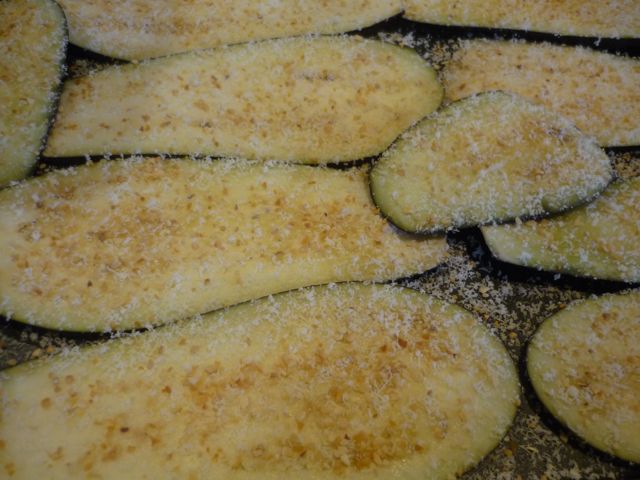
Wash and thin slice the whole aubergine. Put a lavish slurp of olive oil on a large baking tray and coat both sides of each slice. Lay out the slices on the baking tray and grate parmesan cheese over and scatter dehydrated garlic (or spoon fresh crushed garlic)on the top.
Put into a preheated oven at 190*c (I use oven fan), for 15mins or till browned and a little crispy.


>> DHAL <<


Lentils originate in The Middle East. They say the nutty flavour of lentils is what makes them appealing. My family absolutely LOVE eating dhal. To them lentils are soul food. It's a great meal when camping - nutritious, easy to cook and fills big empty tummies!
Lentils need to be eaten with other grains, such as rice or whole grain bread, then they become a complete protein.
The protein content of half a cup of cooked lentils eaten in this way, is equivalent to the protein in one egg.
Lentils are a good source of Vitamin B, they have no fats but do have lecithin which helps to deal with fat.


Olive oil
1 sliced onion
1 large garlic clove
1 cm slice fresh ginger
1  1/2 teaspoon coriander seeds or
      powder
1 teaspoon cummin seeds or 
      powder
1/2 teaspoon black pepper corns or
      powder
1 teaspoon salt
2 teaspoons Garam Masala
2  1/2 cups red lentils (these are 
      quick to cook)
                                                                   5 cups water
                                                                   1 tin coconut cream 


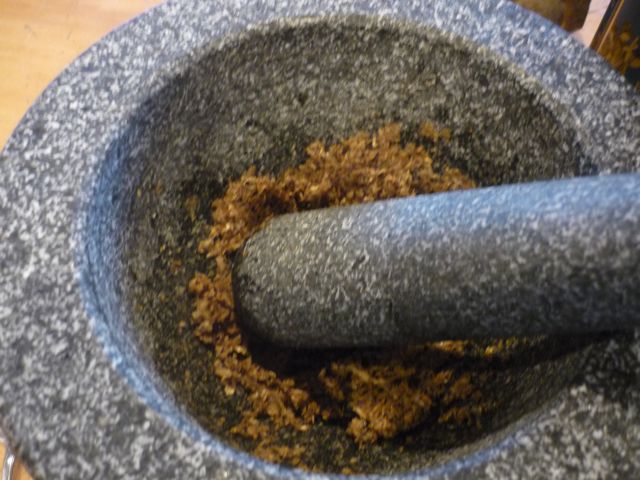
Slurp olive oil into t medium sized pot. Add onion and cook for 5 mins on a low heat. Put garlic, ginger, coriander, cummin, pepper, salt, and garam masala into a mortar and pestle - crush and grind. Spoon into the onion pot and keep cooking 5 more minutes.
Add red lentils stir through then add water, stir. Turn up the heat and cook on medium-high for 10 mins, then turn back down to low for 15mins. Stir every few minutes. Add the decadent coconut cream, stir and cook for another 5 mins. Serve with steamed rice


THISWEEKWITHTHEKIDS ~ Be BOLD and cook using a main ingredient that is 'new' to you. If you're stumped for ideas have a look at recipes from a different culture to your own - you could get the kids to choose, then help make it.
Cathy

Thursday, September 22, 2011

PARENTS PUTTING CHILDREN CENTRE-STAGE IN LIFE WEEK 55 QUOTE 55


"Not long ago I was travelling through Dallas-Fort Worth airport, sitting at a food court, when a three-year-old girl let everyone within two blocks radius know that she wanted a Happy Meal. Mom said no, and the daughter brazenly slapped her mother in the face.
Grandma, who was seated with the mother and her daughter, looked on in horror. She was clearly mortified by her grand daughter's behaviour, but seeming more so with the mom's actions! You could see the words she so wanted to say: 'Are  you going to take that?' Not only did the mom take it, to make things worse she actually got up and bought her daughter a Happy Meal! I had to fight every impulse within me to get up and explain to this weak-willed parent what she was getting herself into."
"TEMPER TANTRUMS - Don't Let Your Child Call the Shots" by Clivechung on HubPages.


On first read this may simply look like a little child having a temper tantrum - which it is. But as well as a child choosing to misbehave in a public place, a parent is choosing to be manipulated and controlled by her preschooler. The child has called the shots. A mother has fallen into line under her command. The gratification of the insistence of a child for a particular food, has been given a higher priority by the mother, than securing that her own decision was carried out. She is putting her child centre-stage in life.
A child is put centre-stage if there is too much attention directed towards them. It can be the baby-sitter, an auntie, grandparents, a family friend, one or both parents. They worship the child and allow them to have their own way in areas which are not theirs to hold any authority in at all.
Some families centre-stage one child, for reasons including the following ~
   ~ they are a physically beautiful child
   ~ they are academically smart
   ~ they are gifted musically or artistically
   ~ they are competent in sport
   ~ they are the only girl in a family of boys
   ~ they remind the parent of themselves as a child......
Some families centre-stage all their children. It could be that they believe their method is an example of love and freedom, of giving opportunities of choice, thereby helping the children in future life. But if a child no longer sees them self as a child in the family, but thinks of them self as having authority over others in the family, or, they think their wants, preferences and choices have higher priority than the rest of the family, then this child is being allowed to live centre-stage in the family.
My hero Charlotte Mason, describes a child who is put centre-stage as being "out of orbit and not of use to society". She goes on to say that all children "....come to us with two inherent forces, centripetal (=moving or tending towards a centre, towards oneself) and centrifugal (=moving or tending to move away from a centre, away from self), which secure to them freedom, ie, self authority, on the one hand and proud subjection on the other." page 70 "A Philosophy of Education":Charlotte Mason.
The child who is put centre-stage is barely developing the "centrifugal" force in their character at all, hence Charlotte's description of them being "out of orbit". This is entirely true. A centre-stage child thinks on life from the perspective of them self - only. They don't think outside themselves because they have been trained that the focus is on them. Consequently they are numb to other's needs, feelings, rights of choice... Even more alarming, if allowed to develop to maturity, they are unable to put themselves into the experience of an opposing position to themselves - no empathy, they have sympathy, but of a type that is motivated by their self preoccupation, so it suits them, makes them feel good... Another result is that they are not team players. If circumstances demand they work in a team, the centre-stage person only participates on their terms. The democracy of the team set-up is re-configured into more of a 'do it my way' or the person simply leaves the team because it won't cooperate with them. 
Why is this? Because in the main, their experience is that parents have always stepped out of their way for them. If they want something it has been granted. The expectation that everyone fits-in with them escalates.
HELPS AND CURES ~
For a parent in this situation there is only one solution. The behaviour of the child must change, and this only happens if the behaviour of the parent first changes.
   1. It begins with saying "No" to the child, not just one time and then giving way to the child, but sticking to the "No", carrying out the full consequences of that situation's "No". If this pattern is consistently lived by, a parent's relationship with their child will radically change, and a centre-stage child's behaviour will improve. The dominance the child has over the parent and entire family, will in time disappear. Consistency however is essential because you are changing a habit both in yourself and your child. Any wavering nullifies all the territory already gained. Think of how important it is to keep on target with the rehabilitation plan for the alcoholic and drug addict, to get to full restoration. 
When we say "No" to our children we are setting boundaries and limits for them. This way they learn their appropriate place in our family, not as Boss, but as a child who is part of the family, community, society and country..... A correct perspective on self for the future.
   2.  Parents need to identify situations when they regularly put their child centre-stage, allowing them to call the shots. If parents plan how things are going to operate before getting into these situations, and communicate this to the child, then life starts to move along lines where the child has to fit-in. For example, the mum in the above quote could have prepared her three-year-old before leaving for the airport, by explaining that when Grandma arrived they would go to a cafe and have a drink. Just a drink, nothing to eat, just a drink. By telling the little girl what they were going to do, how they were going to operate while at the airport, mum would have felt organized, leading the way into the occasion.
   3.  A third area where children can develop a mindset of dominance or deference is through attitudes portrayed in movies, games, TV and the books they read. From these pursuits, do they 'see' people who are out for themselves, annihilating others for their own dominance? Or do they find people who think of others, are brave, but for the benefit of others? Media such as movies, video games and TV for children, give clear and full descriptions of what both these styles of character look like. Parents need to decide which style they want to feed to their children.
   4.  Once the parent establishes these new patterns, the child may react badly. This is where a parent's best ally is to stay relaxed. "Don't buy into the dramas or feed them to make them worse." from Karyn Van Der Zwet : "Parents : Some Kids NEVER Get Bored" Kloppenmum blog. Don't shout over the child's performance and screams. Don't negotiate or debate. Don't get involved in the "soap opera, replete with yelling and tears and general gnashing of braces. Like I said you need to deal with this with a sense of humor." says John Rosemond, family psychologist : "Parents Can Give Children Too Much Attention". His point is not to give our attention to the ridiculous behaviour while the child continues in it. But instead forcing them to give up the big fuss, control themselves and get used to how the real world operates - for everyone, not just for them.
You may like to read Karyn Van Der Zwet's post "For Parents : Emotional Support V Emotional Indulgence".

PART 2 TO COME.


THISWEEKWITHTHEKIDS ~ If you find that you are the parent described above, hopefully there are points in the HELP AND CURES section you are eager to get working with.
Cathy

Wednesday, September 14, 2011

THE CLOSE RISK OF EYESIGHT LOSS WEEK 54 QUOTE 54


"An 11-year-old boy has permanent eye damage from the beam of a green laser pointer that was bought as a toy.
It burned his retina - the light-sensitive back of the eye - leaving a 1.5mm scar and increasing his risk of developing central-vision blindness.
His eye specialist, Dr Diane Sharp, and his mother want the Government to follow other countries and restrict access to high-powered laser pointers.
Regulations are being developed, but laser sales are still unrestricted.
Their call follows a demand from the Airline Pilot's Association for regulatory action.
The association is concerned at the number of cases of laser pointers being shone at planes in the air - at least 17 this year - which could distract or dazzle a pilot at night, leading to a crash.
The devices have also been used against police, sports stars and car drivers.
They are intended for use as lecture pointers or for pointing out the direction of stars, but often they are sold as toys or gimmicks and are dangerously and unnecessarily powerful.
The 11-year-old, whose family requested anonymity, bought his 200milliwatt laser pointer for $15 during a family holiday in Thailand in January.
His mother said that in June, he played with the pen-shaped device in his bedroom with a friend on a sleep-over.
Afterwards, he had a "fuzzy blob" in his vision.
His mother later learned he had lasered his eye when he shone the pointer in a mirror and was momentarily hit by the reflection.
She said the family knew not to shine the light directly into the eyes, but did not know of the risk in reflecting the beam.
The boy has lost some visual sharpness in his right eye, reducing its reading level on the eye-testing chart by three print sizes, but his overall vision is not greatly affected because his left eye was not lasered.
"We are going to be extra protective of his vision because he is slightly compromised," his mother said.
"I feel bad because (the pointer) just seemed like a fun, groovy thing to buy. It did have this warning on it, but we had to get the magnifying glass out subsequently to see it : 'Danger, radiation, avoid direct eye exposure.'"
"There needs to be raised public awareness about the easy availability of them and the potential damage that can happen so quickly."
Dr Sharp said: "The voluntary standards are not adequate for this device. Consumers do not understand the classification system. A class-three 200mW green laser is extremely dangerous."


Laser pointers can be used for :
* Lecture and presentations. The National Radiation Laboratory says 1 milliwatt is powerful enough.
* Amateur astronomy, for pointing towards stars and aiming telescopes. Laboratory says 50mW is maximum needed.


Unsafe uses :
* Don't give any laser pointer to a child as a toy.
* Don't aim one at a person, especially the eyes, or at a mirror."


"BOY'S HIGH-RISK LASER TOY LEAVES HIM WITH SIGHT LOSS" by Martin Johnston. nzherald.co.nz.


To understand a little about how light from a laser works, I found an excellent article on line from Scientific American, "Can a Pocket Laser Damage the Eye?" It compared a laser light with the light from a light bulb.
A light bulb sends light out in all directions and we see only a small amount of that light at one time. A laser however, sends out light in one small beam, so if the laser is aimed at an eye, the eye is receiving all the laser's energy.
The light of a light bulb is of different or varied wavelengths, but the laser is "a pure tone, only one wavelength. The coherent light will be more damaging."
"Because of the unique features of laser light, it is magnified by 100,000 times as it passes through the eye. The light passes to the back part of the eye, the retina, which is where we perceive vision."
Scientific American made similar recommendations to the article above, with the addition of "DO NOT look at a beam from a laser through a microscope or binoculars."
In the streets of Auckland city at the Rugby World Cup celebrations, one of my sons saw children with laser 'toys', shining them into people's faces. The danger when laser pointers are mishandled, definitely needs to be more prominently known!
Another source of damage to eyesight, can come from the more readily used, digital camera flash.
Recently the 18-year-old daughter of a friend, suffered damage to her eye after photographing herself at arms length in the dark, with her digital camera. As she took the shot, she held the camera to the side. The camera possibly focused on the wall behind her, the flash therefore giving a more generous quantity of flash to light the distant wall, in comparison to if it had focused on the girl herself.
Dr Diane Sharp, who is a part of this case, along with fellow collegues, found the degree of damage to the girl's retina, surprising. The camera flash was tested to check if it had malfunctioned and was found to have an acceptable intensity.
Online I researched camera companies to see if they carried any warnings in their information section about dangers with camera flash ~
Kodak's warning was detailed and clear especially in relation to photographing children, recommending no closer than 1.5 metres.
Nikon and Olympus likewise expressed caution when photographing infants, recommending no closer than 1 metre.
Pentax said, "Do not use flash near anyone's eyes ..... be particularly careful with flash around infants."
However online "Peano's forum article "About Eye Damage from Flash" in February 2007, said "....to produce .... permanent damage, a focused intense light must be held in one location on the retina for a time several magnitudes greater than the duration of a camera flash .... flash as a main light in dim light conditions may produce a temporary reduction in vision but no permanent damage. Flash on nocturnal subjects during nighttime should be used sparingly due to brief impairment of vision. ..... Hypothetically, if scientific information indicated that flash photography under normal use, produced permanent retinal damage, it would trigger additional rules and regulations."
Tim Solley in "Will Flash Damage Babies' Sensitive Young Eyes?", came to the same conclusion as Peano's forum. Having done a thorough Google search on material up to September 2007, Solley said that camera flash cannot permanently harm the eyesight of babies.
These two comments and others like them on Google, are probably completely accurate when photography is practiced within the norms of the pre-'bebo' years.
Digital cameras became more common around 2003-2004. But it was probably in July 2005 when the website 'bebo' was launched, that the phenomenon of photographing oneself at such close range, actually began.
Searching through Google from 2011, 2010, 2008 and 2006, the number of handheld self photographed images diminishes sharply with each year, until in 2004 I could only find one recorded image taken in this method.
A handheld self photographed shot, is CERTAINLY less than 1 metre distance from camera to subject face, and in some cases would barely be 50cm in distance. This is well below camera makers recommendations, putting this style of photography out of the category Peano's forum described as "flash photography under normal use".
With increasing numbers of people using cameras in this manner, POSSIBLY the effects and dangers thought previously not to be possible, need to be researched and reassessed. Eye specialists are alert and have begun research, and professionals in the camera industry should follow, re evaluating their warning information with flash usage.
If an eye is damaged by a camera flash, the other eye works toward compensating for it, over the following days. This can give an injured person, a false idea that healing has occurred. This is why it could be hard for parents to determine if a small child has eye damage or not.

How does all this affect someone using flash on their camera?
  *  Do you really need a flash? If not, turn it off. I recently watched a mum photographing her
      preschooler in doors. She took dozens of shots all on flash, at a distance of less than a metre.
  *  When you do need to use flash, get children to look to the side of the camera before the shot, NOT
      at the flash. (my friend suggested this and the next 2 suggestions - thanks C)
  *  Restrict photographing in the dark. Eyes fully dilate in the dark and so are fully open to allow the
      maximum amount of flash in - this is dangerous.
  *  If photographing in dark conditions, be aware and careful of where you aim the camera. A camera
      flash senses how much light is needed to illuminate the object in focus. If it is directed at a distant
      wall, you over flash yourself.
My friend's daughter has been recovering well since her accident two months ago.

THISWEEKWITHTHEKIDS ~ If your kids take flash photographs, maybe you need to share this information with them. 
The dangerous risks with laser pointers, needs to be circulated and made public to parents and children alike.
Cathy


Thursday, September 8, 2011

THE DAY BEFORE THE RUGBY WORLD CUP OPENED: A 21 IMAGE TRIP IN AUCKLAND. WEEK 53.

We parked the car at Devonport.


As we walked to the ferry we passed a crew of gardeners planting parsley and silverbeet in the public gardens along the street.


We hopped on the ferry and headed for Auckland city.


Gliding passed the lately erected pavilion called "The Cloud".........


we docked in front of the old Customs House in Auckland city.


Immediately, THE IMAGE, bathed in brilliance, welcomed us.


We entered the Wynyard Quarter and crossed the team colours striped walkway heading to the Wynyard Crossing - the bridge perfectly opened for the shot!


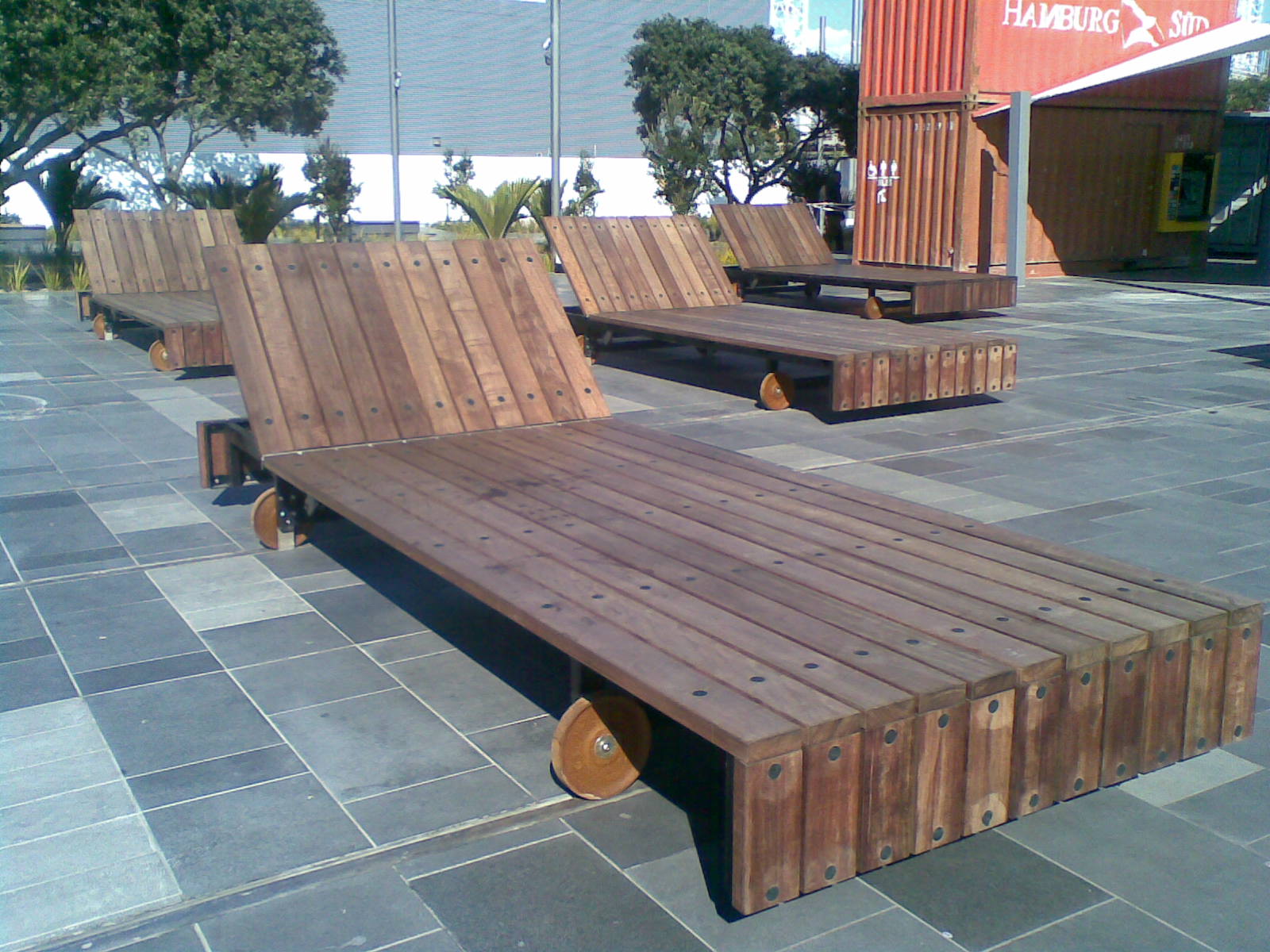
The huge two-people sized wooden lounges, waited on the other side for any who were tired and needed a rest.


A coffee and cake at Rush Worths (son-in-law works here).....


then a stroll along the kilometre of low wooden bench seats that perimeter the harbour.


We arrive at stage one of Silo Park in the Wynyard Quarter.


After climbing the 12 metre high, 110 metre long steel gantry, we stand by the swamp grass ponds looking back along the kilometre bench seat walkway.


Wish I could  have played on the beautiful shell themed playground.


Into the fish market which is right in the Wynyard Quarter.


A stop for ice cream.


Into "The Cloud" , under the clouds - at the other end of the Wynyard Quarter.


After a free bus trip out of the Wynyard Quarter up Queens Street, we walked up Wellersley Street towards the art gallery and found the Keruru sculpture. The Auckland Art Gallery reopened last weekend after a revamp.


"Red" by Choi Jeong Hwe, greets us at the entrance to the art gallery


I love the soft reflections in the water pool underneath.


We slipped back past "The Cloud" on the ferry, ready to go home.


THISWEEKWITHTHEKIDS ~ I guess most Kiwis and visitors to NZ will be heavily involved in rugby and enjoying our beautiful cities in Aotearoa ~ The Land of the Long White Cloud.


Cathy