Tuesday, September 14, 2010

WEEK 21 QUOTE 21


 I missed being home for FATHERS DAY this year, having recently flown back to Australia for family birthday celebrations and a much looked-forward catch-up with family, old and new friends. A FABULOUS time! I assisted my mindset preparations by getting into Ruth Park's book2 of her autobiography ~ "Fishing in the Styx". Single and in her early twenties, Ruth writes of her adjustment to life once she arrives in Sydney and is speedily married, all in the early days of WW2. Here's a quick 'taste'.
"Like most young couples my husband and I spent the first months of marriage trying diligently to change each other in both subtle and explosive ways. D'Arcy said I required him to become a person half way between my father and Gary Cooper, and he was damned if he would.  He did not want much; only that I should transmute quick smart into someone his mother would tolerate if not like. Like so many sons of alcoholics he was very protective of his mother and longed for her to be happy with his choice of wife. Still, our affection was such, and remained so steadfast, that very shortly we both accepted the exasperating for the sake of the good, which was manifold."
Ruth and D'Arcy had very different fathers.

My intention in this post is to put up some quotes written by fathers. Some speak of  fatherhood, others contain humour and the rest, what they judge as important.
Hope it was a happy FATHERS DAY at your house this year

"A father carries pictures where his wallet used to be"
Unknown.
I love this one and hopefully it is true for you if you are a father - your focus of what is important has decidedly shifted, rather than the other possibility that fatherhood has brought you poverty.

"I cannot understand how I managed to cope without getting the cuddles this many times a day."
Russell Crowe on unconditional love.
Great to read of a dad expressing a real benefit he personally has found in being a father.

"I've made a lot of mistakes in life - many in parenting. I've also learned a lot by being a dad, probably more than I have learned from any other area in life." 
Cole Ruddick, a solo dad.
An honest and realistic comment on being a parent. We all make and continue to make "mistakes", and hopefully like Cole find parenting a source that regularly enriches our lives.

"It is admirable for a man to take his son fishing, but there is a special place in heaven for the father who takes his daughter shopping"
John Sinor.
(Could only find a dad and daughter supermarket photo, no clothes shopping photos) I'm sure all dads don't find shopping with their daughter a difficulty, but John's encouragement to get involved in the child's life you don't automatically connect with, is a wise thing.

"Cultivate your own capabilities, your own style. Appreciate the members of your family for who they are, even though their outlook or style may be miles different from yours. Rabbits don't fly. Eagles don't swim. Ducks look funny trying to climb. Squirrels don't have feathers. Stop comparing. There's plenty of room in the forest."
Chuck Swindoll.
I love the perspective here, to identify who and what you are and then to do the same for each person in your family. Just because we may share a common surname, doesn't mean our bent, passions and approach will be similar. So identify what each person is. Then "appreciate" each for who they are, and finally urge them to "cultivate" themselves.

"It has taught me that there is no one moment that is frozen in time. There is no better example than to watch four kids grow up. For instance, I'm not feeling particularly steady right now, but this is not going to last for more than a couple of minutes. Same with raising kids. There are no moments you have frozen in amber. It's moving, it's changing, so appreciate what's good about right now and be ready for what's next."
Michael J Fox on fatherhood and Parkinson's disease.
Here again is the challenge to "appreciate". 
Appreciate means to perceive the full force of, understand, be sensitive to, esteem adequately, recognise as valuable or excellent, be grateful for.
It is true, our lives and all events are in process, ever developing and altering. Some experiences are hard to weather while others give endless pleasure. Michael's thought to stop and savour the good in the now, gives us a hint on how to live well, as he is obviously doing.

I found it refreshing to read these quotes and others too, and discover that so many men's thoughts on being a dad were not limited to their own role. Rather they quickly spoke of their link or relationship with their children and it's beneficial affect on them.
Cathy    


Saturday, August 28, 2010

WEEK 20 QUOTE 20

"It's happening all over, in all sorts of families, not just young people moving back home but also young people taking longer to reach adulthood over all. It's a development that predates the current economic doldrums, and no one knows yet what the impact will be - on the prospects of the young men and women; on the parents on whom so many of them depend; on society, built on the expectation of an orderly progression in which kids finish school, grow up, start careers, make a family and eventually retire to live on pensions supported by the next crop of kids who finish school, grow up, start careers, make a family and on and on. The traditional cycle seems to have gone off course, as young people remain untethered to romantic partners or to permanent homes, going back to school for lack of better options, travelling (and often gruelling) Teach for America jobs, forstalling the beginning of adult life."
by Robin Marantz Henig.  Published August 18 2010  New York Times Magazine.

PART 3 - "WHAT SONS NEED FROM THEIR FATHERS"

Although this quote is not distincively referring to sons or fathers, they are included in the category the article discusses. The article's message leads into the first point of this post.

6. LEARNING ABOUT INDEPENDENCE.
Today everyone has a different opinion of what independence is. Most parents think of it as one of their goals, part of their 'job' in bringing up children. It is said that boys usually desire and move towards independence from parents earlier than girls.
Independence is described as ~ not being dependent on someone or something for existence, validity or effectiveness.
                                                 ~ not influenced by others.
                                                 ~ thinking and acting for oneself.
                                                 ~ not depending on another quality for its value.
                                                 ~ life of its own.
                                                 ~ not subject to outside control.
                                                 ~ not connected or attached.
All these definitions suggest that the independent person operates completely and maturely without assistance. Are young people who cry for their own independence from their parents, really living a life that can be described in the above terms? Independence = autonomy.

~#** FACT **#~  THE DICTIONARY DEFINITIONS FOR "INDEPENDENCE" HAVE NOT CHANGED. PARENTS CAN STILL MAKE THEM THE GOAL TO POINT THEIR CHILDREN TOWARDS.


Robin Marantz Herig's article alarms us into looking more critically and honestly at what we are doing and need to do from here on with our children, regardless of their age. Or is it all inevitable, a new order or step in the times we now live in? Henig points out that "Getting to what we would generally call adulthood is happening later than ever.....To others, the long road to adulthood signifies something deep, durable and maybe better-suited to our neurological hard-wiring. What we're seeing, they insist, is the dawning of a new life stage - a stage that all of us need to adjust to."


Jeff Arnett, author of 'Emerging Adulthood:The Winding Road from the Late Teens Through the Twenties', argues that a century back, society took time to take on board the concept that adolescence was a new developmental stage. And in time "education, health care, social services and the law all changed to address the particular needs of 12 - 18 year olds." Arnett also comments on the confusion society has given  teens and 20's with the various ages to be able to vote, legally drink alcohol, join the military, legally leave home, drive a car, rent a car without "hefty surcharges", be still covered under parents medical insurance plans, parents income considered when children apply for university scholarships.... "We seem unable to agree when someone is old enough to take on adult responsibilities".
He also tells us that neuroscientists used to think that the brain stopped maturing soon after puberty, but now they know it continues to mature up until around the age of 25. - "the only people who got this right were the car-rental companies."
Arnett is publishing a book for parents of children in their 20's, in 2011.


As this article suggests, parents can play a large part in keeping a child in their teens or 20's "in limbo between adolescence and adulthood", by being "helicopter parents" or parents who pay for their children's living costs.


As some participants in Arnett's studies have stated, this emerging adulthood option is only for the privileged , well-heeled families. Arnett disagrees and uses a girl, Nicole, as a representative of an impoverished background. For her, "emerging adulthood represents an opportunity - maybe a last opportunity - to turn one's life around."
But Arnett admits that not every young person goes through a period of "emerging adulthood - identity exploration, self focus, experimentation in love, work and worldview". He says sometimes they miss this stage by choice or by circumstances handed to them, and may face it at a later stage in life such as a midlife crisis, or never face it at all. Arnett's close friend, Richard Lerner, disagrees, saying "you must develop, what you're supposed to develop when you're supposed to develop it or you'll never adequately develop it." Lerner says that for emerging adulthood to qualify as a developmental stage, it must be "both universal and essential"


Henig asks, is this a stage that is here to stay or not? If it is here to stay, she says systems need to change to accommodate it, and makes some suggestions.
It interested me that each suggestion had at its base the element of teaching the person in their 20's, to take responsibility in some shape or form, of their own lives - learn to become independent.
Marantz Henig seems to state that independence must be reached, sometime.


As this article hints and as I suggested in my post WEEK 17  QUOTE 17, both parents are involved in the process of children coming to independence. Henig only momentarily touches on the connection of 20's who don't choose to "get on with their lives", with parents who are overly involved with their children's lives, be they "helicopter parents", parents who pay for their children's living costs or parents who are known by their child to not step back out of their lives. It agrees that parents can continue to contribute to the lives of their children even into their 20's. Therefore parents must be able to change their tactics and assist their teens and children in their 20's to move toward independence.


In the case of sons, the route to independence is through a teamwork approach with dad. Working together, having ample experiences of challenges with their built-in risks, together with dad. Fathers have a different perspective on independence to mums. Boys in their teens need more dad or male perspective, than mum's to become independent.
This experience of challenges must be regular and escalating in what they demand. A once-a -year rock climb won't contribute a lot into helping a boy to learn independence. It is essential that it be regular, and with dad present.
Don't load them up beyond their years or maturity level - eg, 'Take care of Mum won't you, Sam" to six-year-old Sam, as dad leaves for six months away with the army. Sons need the satisfaction of involvement in a process with others, with support being decreased over time, and seeing something completed successfully. True independence will not be learnt by a quick demonstration through the steps and then handing the job over to be completed and done by the son, alone. This only builds resentment and a self-centered form of independence.
Repeated happy experiences with dad, not only give skills and expertise but also builds positive confidence, self esteem and a correct view of responsibility, into the mind of a son. From this well developed mental state, a son is more likely to move successfully towards independence.


~#** FACT  **#~ INDEPENDENCE MUST BE MODELLED AND TAUGHT BY DAD OVER TIME (REGULARLY) THROUGH WORKING TOGETHER (DAD PRESENT).

7. MASCULINITY.
With the western world's trend to decreasing male influence into the lives of boys, we now have a confusion about what maleness IS.

Ian Grant describes it as ..."sometimes confusing strong with violent, virile with promiscuous, adventurous with reckless."

What is masculinity, maleness, being manly? For some it's to go into the back blocks of New Zealand's South Island to hunt deer or catch fish, for others it's lifting 50kg weights or training hard in rugby. Sam Koenen suggested "hair-chested scotch drinkers ....tattooed torsos attached to 22inch biceps..." The dictionary says masculinity is characteristics or qualities that are particularly male.

Many authors and researchers agree with Frank Pittman, "Man Enough: Fathers, Sons and the Search for Masculinity", who says that boys learn about masculinity from their dads.

~#** FACT **#~  IF DAD IS NOT AVAILABLE TO BE THE ROLE MODEL, THEY USE THE MEDIA MALE ICONS AS THEIR MENTORS AND "AS A RESULT THEY GROW UP MIRRORING OVERBLOWN MYTHS OF MANHOOD" 

Sam Koenen in his blog "MANLY DAD", says "masculinity is most manly in the realm of fatherhood". He goes on to talk about a number of facets he names as characteristics of being male  - an Explorer, a Cultivator, a Protector, a Wisdom Gatherer and a Disciple. He writes that the Explorer's main aim is to discover. He is also a visionary who is prepared to 'travel' into unknown areas at risk to himself. "The central motivation of the Explorer is a deep-felt desire to conquer and subdue - to exercise dominion. This is why boys love tree forts and playing war. This desire for dominion seems inherent in most boys, and parents (especially fathers) must be wise to cultivate it."
Koenen encourages fathers to be fully involved in a boy's games of conquering and subduing. He has only briefly introduced the other four facets.

A boy's desire for dominion was historically put to the test in Africa, Jewish and many other cultures. At the age of fourteen, a boy was considered to be entering manhood and initiation ceremonies of challenges, adventures and tests, were the norm.

The medieval practice for boys of the middle to upper class being trained first as a page, then advancing to a squire and eventually graduating to become a knight, may seem rather 'picture-book' to us today. But in those days boys had clear role models of some aspects of masculinity to identify with.

I agree with Sam Koenen that boys desire to explore this aspect of their inherent character. My boys have all shown interest in books they read and games they played for many years, be they knights, soldiers or conquerors who won their battles.

James Stenson in "Father, the Family Protector",  makes the point that adult males have instincts, attitudes and physical strengths which equip them "for tough-minded, sacrificial service to those people who count most in their lives, starting with their families." He says that the instinct to protect "lies at the core of a man's masculinity." He also describes how this instinct is developed through a variety of aspects of a boy, from a young age.  ".... his muscles, will power, stamina, competitive drive, aggressiveness and assertiveness, mathematical and abstractive powers of mind, love for strategic planning and manipulating physical reality, strong sense of fairness and ethical conduct..." all combine to produce a man with strong protective instinct. 
Stenson tells a story of an experience that he had one weekend with a friend when trying to cross a busy city street. As they  waited at the crossing on the roadside, an elderly lady who was blind with two, possibly, granddaughters, and a German shepherd seeing-eye dog, waited on the opposite kerb to cross the street. "Suddenly -- chaos. From down the block hurtled a large mongrel street dog, barking and snarling loudly, spoiling for a fight. Swiftly he lunged at the German shepherd , who sprang back at him in snarling, furious rage. The two dogs pounced and snapped with bared teeth at each other...... and all-out serious fight. The noise was loud and shocking." 
The old woman thrashed her walking stick around, the two girls screamed, shrieked and sobbed, and the two dogs fought.
The noise of this wildness "electrified everyone in earshot". The writer and his friend ran across the street to help as countless young and middle-aged men appeared on the scene, having dashed out of cars and taxis - motors left running, doors wide open. A man from a nearby townhouse raced in, rolling up his newspaper in his hands as he ran, to use as a club to separate the fighting dogs.
Twelve to fifteen men came to the woman's aid, removing her and the girls to safety, hitting the dogs with newspapers and jackets, chasing off the attacking dog. They then turned to calm and reassure the woman and girls that everything was OK. Afterwards people drifted off, men returned to their cars and the woman and children crossed the street, entering a home nearby.
Stenson comments on what happened. "Men dropped what they were doing and heedless of their own safety, flung themselves forward to protect others...."

Here is a picture of masculinity.

Boys are male, and a father's displays of maleness has the potential to be a far bigger influence on his son than any other males influence. This is why fathers who neglect this responsibility, fail their son's miserably. "This lack of attention from fathers, results in the son's inability to identify with his father as a means of establishing his own masculinity. A son deprived of the confirmation and security that might have been provided by father's presence, is unable to advance to adulthood." says John W Wilson.

~#** FACT  **#~  TO FIND THEIR OWN MASCULINITY, SONS MUST IDENTIFY WITH THEIR OWN FATHER.

Mr Wilson also says, "A males gender identity - his masculinity  - has been and continues to be volatile. It has to be earned and proved on a day-to-day basis. A man can't just be masculine, he must constantly "prove it"......Being a man means achieving, accomplishing.... and providing adequately for oneself and one's family." 

~#** FACT **#~  SONS NEED THEIR FATHERS TO LEAD THE WAY, BE REAL AND FRANK ABOUT LIVING AS A BOY AND A MAN.

THISWEEKWITHTHEKIDS, dads care for your sons and boldly put into place the things necessary to build your boy into an independent male.

Cathy   


Tuesday, August 10, 2010

WEEK 19 QUOTE 19


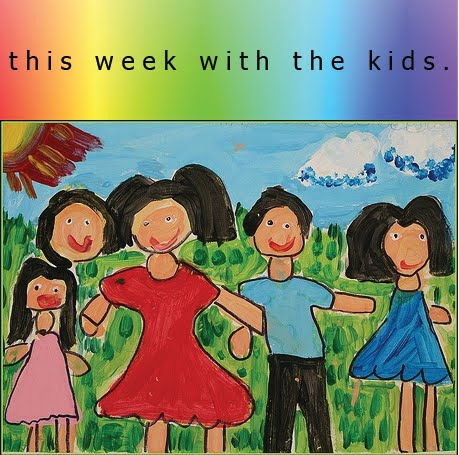
A COLOURFUL NEW LOOK FOR "THIS WEEK WITH THE KIDS" - THANK YOU INDI AND SETH!!!

"When I was a boy of fourteen, my father was so ignorant I could hardly stand to have the old man about. But when I got to be twenty-one, I was astonished at how much he had learned in seven years."
Mark Twain.

The arrogance of youth! But we've all been guilty of the same - sure opinions being reviewed and often adjusted, even discarded as we have matured. If you have a son that is fourteen and are struggling in your relationship, there is hope of him changing his attitude towards you as you change your approach with him. Read on for some help on how you could do this.

This post is a continuation of the previous post - WEEK 18 QUOTE 18.
It is PART 2 of WHAT SONS NEED FROM THEIR DAD.
In the previous post I talked about ~
* how dads can and why they need to CONNECT with their sons.
* sons need DISCIPLINE, AFFECTION, LOVE AND FORGIVENESS from their dad.

In this post I'll talk about ~
* dads need to be a MODEL OF EMOTIONS AND SELF CONTROL.
* dads must SHARE REAL LIFE TOGETHER with their sons.
* sons can best be EQUIPPED FOR THE FUTURE by dad.

This last section has five points, the fourth and fifth points are still in process, so will have to wait till the next post.


3. MODEL OF EMOTIONS AND SELF CONTROL.
Sons need dad to be a model of living well with his emotions and self control, that is worth following. I think Sean Sands was a pretty good example of self control in the Quote from the last post.
"There is some frightening research from Australia: nearly a third of men never speak to their father. Another third only use 'put downs', or mock their fathers when speaking to them. The final third have merely 'distance' talk: about sport, power tools etc. Only one in twelve sees his father as an emotional support."
I read once about a Catholic nun who was involved in working in a prison for men. A couple of weeks before Mother's Day, she was asked by an inmate if she could get a Mother's day card for him to send to his mum. When other prisoners heard about it they also requested cards to send to their mums. The nun phoned a card company, explained the situation and they agreed to supply her with a huge quantity of Mother's Day cards for free. They were all snapped up by the inmates. A few months later as Father's Day approached, she decided to be prepared and so phoned the card company again and was given a huge supply of Father's Day cards. Not one male prisoner asked for or wanted a Father's Day card when offered. Years had passed and the same situation was repeatedly lived out in front of her - she always got rid of the Mother's Day cards, but was still stuck with the first shipment of Father's Day cards!
The way we live emotionally really governs our lives. A son, particularly in his early years, watches his dad's emotional patterns and use or lack of self control. These patterns deeply affect his developing character.
Through a dad's emotions, he silently communicates information on the importance , the priority and the value he places on individuals in the family. This will either be positive or negative. Dads need to regulate their negative emotions such as anger, resentment, hatred, jealousy and envy, moodiness, coldness or distance, and be a positive role model.
The two photos at the top of this post are visual examples of the emotion of two fathers which affect their sons - not only for that moment but possibly, who knows for how long?
Sons regularly need to see dad demonstrate self control in situations they know impact dad personally, even hurt dad personally. Boys need to see, know and begin to understand dad's "feeling side". This is a model for them as they learn to respond to a world with many hurts and disappointments.

-#** FACT **#- THE EMOTIONS DAD DISPLAYS ARE ABSORBED AND EFFECT SONS - FOR THEIR GOOD OR TO THEIR DETRIMENT.


-#** FACT **#- SONS NEED TO SEE DAD DEAL POSITIVELY WITH PERSONAL HURT.

In the last post I talked about play wrestling, this activity is clear in showing a son how to become a good winner and a good loser. He must experience both, because real life gives us lots of experiences of losing, so dad needs to equip him. [ The movie "The Pursuit of Happyness" is a great movie portraying a positive attitude to 'losing'] Play wrestling teaches a son "how to use physical strength without dominating and hurting. Play fighting will help your son learn to control himself, a skill that will be vital for him as he heads into the emotion filled years of adolescence."

-#** FACT **#- SONS NEED TO LEARN THROUGH ACTIVITY WITH DAD, HOW TO CONTROL THEMSELVES.


4. SHARING REAL LIFE TOGETHER.
Before a dad can gain entrance to be heard by his son on real life subjects, he must first make sure he has a strong bond connection with his son. this earns the right to be heard. This is essential with sons of eight years and older.
Again dad is a model that a son copies in the area of learning to listen.

-#** FACT **#- IF DAD LEARNS TO LISTEN TO HIS SON, HIS SON WILL LEARN TO LISTEN TO DAD (eventually)

Listening - like good communication, works both ways. Lecturing is the killer in this area. Dad needs to be open and approachable to honest feedback from the son - even if it is negative. If you know or sense there is distance in the relationship, dad must take the initiative first to erectify the problem. Dad after all is the maturer, more experienced of the two, so he needs to lead the way, set the example to follow. Dad needs to clearly admit when he is wrong, otherwise he teaches his son to never admit fault. These beneficial practices all demonstrate love to a son.
Ian Grant in "Fathers Who Dare Win", suggests some questions to help stop conversations getting stuck and shutting down into non-communication. He says to move away from asking "Why?" questions, instead ask question that open or begin a conversation ~
"What has to be done?"
"What can I do to help?"
"Could you explain a little more?"
"Could you tell me your reason for asking?"
"What needs to change?"
"What are you trying to accomplish?"

Respect - is a very important area to dads and sons alike.
"We all crave the love and understanding of a father. Many men have told me that the most important aspect of their journey from boyhood to manhood was when they finally felt they had earned the respect of their fathers."
Many studies support this high priority acceptance - respect being given by a father to his son. Teenage sons particularly need to know they are important to and respected by their fathers. Through this they develop self confidence and a strong sense of identity.
A son wants to be respected for who he is, not his achievements academically or in sport. He wants to know he is valued for himself, as a person.
Respect can be communicated to a son in the way dad speaks to him. If this is a regular pattern, it will encourage a son to speak respectfully in return to dad. Dad again needs to lead the way.
CLICK here to read Alex Kronemer's great story of his struggle working at being a positive dad to his sons, while dealing with a bad relationship with his own father.

-#** FACT **#- SONS NEED THE RESPECT OF THEIR FATHERS FIRST, SHOWING THEM HOW RESPECT WORKS.

Pornography - The world is increasingly public in displaying pornography. Even in child TV time slots, shops and public places, pornography screams out loud and clear. The statistics of addiction to pornography in men, teenage boys and boys, is alarming.

-#** FACT **#- SONS NEED DADS TO BE HONEST ABOUT THE DESTRUCTIVE EFFECTS PORNOGRAPHY HAS IN BOYS AND MEN'S LIVES, AND EQUIP THEIR SONS TO KNOW THEY CAN MAKE CHOICES TO STEP AWAY FROM ITS HOLD.

Dad needs to know reliable information here, as this industry is subtley strong, geared to catch and control its addicts. Once armed, dad can know how to prepare and steer boys away from pornography, as well as look for the signs of bad habits starting.
To help sons with pornography, dad needs to be fully aware of what his son is watching on the internet, TV, video games, movies and magazines.
It seems boys can become addicted to pornography because they themselves suffer from personal trauma which has not been resolved. If a boy's personal trauma stays unresolved, his heart is still hurt or injured. This is where pornography steps in with its superficiality of providing pleasure and the appearance of keeping a boys heart "safe from the possibility of further pain. The reality however, was that my heart became more and more detatched, thus setting me up for further pain down the road," says Ken Weatherbee in his article "Pornography and Trauma. There is a Connection"
This too is where a boy's peers do not always help. Encouragement from friends to be involved and experience pornography can both put pressure on boys to conform, and also be a powerful questioning force on a boy's self assessment of his manhood. The group attitude is that involvement with pornography, proves manliness. So boys can be both confused and pressured.
Ken Weatherbee writes, "To all fathers reading, it is so important to realize how our children, particularly our sons, look up to us as heroes - they are like sponges absorbing our actions and behaviour into their subconscious minds. When we look at women with lust, our sons observe and internalize this example as they develop their own view toward women. Our comments on casualness toward "locker room" talk leads these young boys to establish an unhealthy attitude toward women - sexual toys for our personal gratification."
Mr Weatherbee in his article, describes his trauma as a boy and talks clearly of his own recovery and the program that enabled him to move out from the control pornography had on him.
CLICK here if you want to know more.

-#** FACT **#- IF DAD IS A POSITIVE PART OF HIS SON'S LIFE, THEN HE IS THERE TO PICK UP ON THE MOMENT IN CONVERSATION, TO CLEARLY AND TRUTHFULLY SPEAK ABOUT THE DEADLY ADDICTIVENESS OF PORNOGRAPHY - AND HIS SON WILL LISTEN


5. EQUIPPING FOR THE FUTURE.
Many writers agree that a boy develops into an adult with less difficulties if his father is a part of the whole process.
Positive expectations towards their future life - As already stated, sons need to know their father has confidence in them, holds a high opinion of what they are and what they can be in the future. For fathers with sons who have very different ambitions in life, or approach to work, this can be very difficult. Regardless of this being true ~

_#** FACT **#- SONS NEED TO KNOW THEIR FATHER HAS A HIGH OPINION OF THEIR ABILITY TO MAKE GOOD CHOICES IN THE FUTURE.

As a dad, if you don't think of your son in this way, you need to do some work - either check if your assessment levels and attitudes are appropriate toward your son - or win your son over to improve and change in his attitudes and habits, so he heads in a direction you can be supportive of.
A son's confidence, self esteem and sense of self worth is all wrapped up with his relationship with dad!

-#** FACT **#- FATHERS PROVIDE SONS WITH IDENTITY DEVELOPMENT.

The safety, warmth and affection he feels from his father as a growing boy and teenager, all translates into a well adjusted young man who responsibly separates from the family and becomes an adult.

Attitudes to Women - Sons observe, learn and are affected by the level of respect their father demonstrates towards the boy's mother, and women and girls generally.
His perspective and treatment of people of other cultures and socio-economic groups, also affects a son's developing mindset for the future.
The father-son relationship shapes the son's attitude to sexuality, his emotional health, his relationship with his future spouse and his success relationally as an adult.

Sex - Most dads have certain areas of life that are important to them, which they want their sons to know about and be competent in - maybe to handle money well, or be able to build a house. For my husband, he wanted all our children to learn a musical instrument, because he is musical and music is important to him.
The subject of sex is important to dads and likewise to sons. However sex is not a subject that many dads willingly pursue regularly in conversation with their sons. it is natural that a boy wants information and to understand sex.

-#** FACT **#- SEX IS IMPORTANT TO MALES, SO IT IS A MUST THAT DADS DO MOST OF THE TALKING ABOUT SEX WITH THEIR SON, INSTEAD OF ALLOWING THE SCHOOL, THE PUBLIC BILLBOARDS, TV AND NEWSPAPER MEDIA, MOVIES, MUSIC AND MAGAZINES, TO GIVE THEIR VERSION OF THIS IMPORTANT SUBJECT.

"Ten Talks Parents Must Have with Their Children About Sex and Character" by Pepper Schwart and Dominic Cappello, seems to be a popular and a useful book. It asks parents to identify their own values and views on ethics and religion and then assists you to teach these in the context of sex education with your children.
"The Story of Me" by Stan and Brenna Jones, "Before I was Born" by Carolyn Nystrom, "What's the Big Deal?" by Stan and Brenna Jones, "Facing the Facts" by Stan and Brenna Jones - we have found great as conversation starter in discussion with our children.
"Sex with Attitude. A Relationship Handbook" is marvellous both in delivering text in up-to-date language and in it's creative visuals. All the "Attitude" books are highly recommended - "Hardwired. A Handbook for Growing, Inhaling and Injecting Life", "Attitude. A Handbook for Your Head". Look at their website - www.attitude.org.nz
It is dad's responsibility to not keep sons in the dark about sex. This is a known cause of boys often getting involved in pornography. Trying to 'self educate' themselves.

THISWEEKWITHTHEKIDS, again dad it for you to do some thinking and to put new things into practice in your relationship with your son - for HIS sake.
Cathy


Sunday, August 1, 2010

WEEK 18 QUOTE 18


"My six-year-old is wheeled back into pre-op wiping fresh tears from his eyes with hands noticeably shaking. I was not expecting to see him nearly so soon. In fact I didn't expect to see him again for several hours yet. To the best of my knowledge, getting your tonsils out takes substantially longer than three or four minutes. Something has definately gone wrong.
'We had a melt-down', my wife says with forced calm that tells it's own story. 'When they tried to put the mask on, he just....' she doesn't say 'lost it' and she doesn't have to. I know what panic looks like....
'I just can't do it, Daddy'. Fresh tears threaten to spill onto his cheek. I nod in what I think is a fatherly way, but I don't understand and I'm terrified that he will see the horrible hint of disappointment that I am working so hard to hide.
I have always been worried about communicating with my sons. I worry because I have seen enough fathers and sons who go through agonizing decades of not understanding one another, both sides carrying shared responsibility for the insurmountable walls that are built across great landscapes of grief and guilt. I worry because of the relationship I had with my own father for so many years....
I do not want my own son and I to go through that long, potholed road to un derstanding, and yet I feel too often the seeds being sown. He is a challenging boy, just as I am certainly a challenging father, intensely energetic who struggles like no one I've ever seen to fight the impulses that seem to drive him, and when these impulses overtake him, he seems abandoned in a drowning sea of his own making. Worse, I am unequipped to deal with it. I too often interpret it as willful stubbornness, even as I can see in his eyes that he is begging for someone to give him the tools to overcome his impulses.
How can I tell him that I don't have the tools to understand much less help? And so we both become monumentally frustrated for different reasons....
I am holding in my hand a replica of an anesthesia mask that is the current source of my son's deep fear. It is a soft and harmless looking thing, but I catch him eyeing it suspiciously.
I should be doing something. If I were the father I wanted to be, what would I do?.....
In front of me is a scared six-year-old who is putting on a brave face because I showed him where to keep the mask, and it's my job to know how to help him overcome the fear that threatens to pull him under......
The fact that I don't understand that fear in the first place is irrelevant, that I don't understand why he didn't just put the mask on like we'd talked about is just not helpful.
And if my wife and I can't do it, then they are going to hold him down and force him to breath deep until chemical sleep overtakes his panicked mind.
'Let's practice', I say.
The medium for my son and I to reset (regain good communication) is video games. When we reach those impassable waters where you can imagine your relationship being run aground in a tempest of wind and rock, we pull back to the familiar waters of Lego games and Rock Band. Imaginary adventures give us comfort, and when he settles into the crook of my arm as we sit side-by-side on the floor playing games that others might dismiss as meaningless, I realize that gaming has become important in my life like I had never expected.....
My boy is wearing his practice mask, with his eyes closed. 'OK,' I say. 'You've got your scuba gear on and your're jumping off the boat. How many dolphins do you see? Count them out loud.' He counts out twenty dolphins with enthusiasm, pressing the mask to his face. 'Can you keep up with them? Can you swim as fast as them?' He giggles a yes.
The doctors and nurses gather to wheel him back to the OR. They smile at one another to see my son wearing the mask and swimming with the whales and dolphins. As they begin to roll him out of the room I kiss the top of his head, and remind him that the mask is his scuba gear, and he gives me a thumbs up. 'Rock on!' I call out as they wheel him through the double doors, and the best sound I hear before the doors close is his laughter.
I suppose it all can be explained by the sedative, but I hold on to the idea that I was able to connect with my son when no one else could, and that gives me hope.
They tell me that he happily and calmly counted two dolphins before he was under."

From "FATHERS AND SONS' by Sean Sands

What does a son need from his dad? PART 1.

In the mind of some men, to father a son is extremely daunting. Possibly it reflects on the traditions of the past, where children continued to be born until the male heir was produced. Or the idea of the need of a son to continue the family line, carry the family name into future generations.

I heard it said by one father, that he was so glad he only had daughters, by which I sensed that he thought himself relieved of some responsibility he connected to fathering sons. Some fathers feel a huge responsibility in being a dad to a son which they don't feel in fathering daughters.

It is a unique relationship, father and son. It was written that it is the strongest relationship of all, more so than that of lovers. Whether this is true or not, a father was once a boy and so has some understanding or sense of the needs of a son.

1. CONNECTION ~ Sons need to be connected to their fathers - as the story in the quote shows.

As I mentioned in the previous post - WEEK 17 QUOTE 17, a crucial time for boys to have connection with his parents, is in his preschool years. Don Elium in "Raising Sons", says that boys of preschool years seek involvement and the attention of their dad. They commonly copy dad's mannerisms and behaviour, wear his shoes and clothes. Dad is the son's hero, the one he wants to please and receive acceptance and approval from.

As a son becomes a boy he continues to want to follow and emulate his dad.

If there is little or no connection between father and son through the preschool and school years, the results will be clear by the time the son is a teenager. By this stage, after a decade of disconnection, both the father and the son do not perceive the other's opinions or approach to life. In his development toward independence, a teenage son can view his father's expectations and views on life as irrelevant. It follows then that they can disagree on what life for a teenager should consist of. The 'division' between father and son, which is due to their lack of connection, can be short-lived or carry on for a decade or more, depending on whether they choose to deal with is of live with it. If they work at a better connection a good relationship can grow between them even as they express different opinions.
Click on this link to to watch a 8:30 minute promotion film clip called "11Truths about Fathers and Sons". It is advertising a 1 hour documentary titled "Fathers and Sons" which speaks from different view points of being in the father - son relationship.

Statistics show that boys experience more difficulties from absent or non-involved fathers, than girls. The figures for boys from this background are far higher in all areas of delinquency, than they are for girls. So regular, good healthy connection with dad is CRUCIAL for a son.

HOW can dads successfully get close to or CONNECT with their sons?
The best way seems to be through doing things together, dad being available and interested in spending time with his son. Fathers and sons who regularly spend time in this way, build bonds or connections that cause their sons to be more open to talk with dad, and more likely to confide in dad about their problems.

~*^* FACT*^*~ DAD AND SONS WHO HAVE REGULAR ACTIVITY TOGETHER, HAVE OPEN COMMUNICATION.

Regular times together is important, even small amounts of time will build a strong connection for the future.


There are organizations in America specifically set up to help dad and sons to connect through challenging physical occupations - Father and Son Activity groups. They offer part day weekly activities and weekend-long ones. These organizations put boys along side their dads - a team, a couple.


~*^* FACT*^*~ SONS WANT AND NEED TO BE ALONG SIDE DAD.

The best way to do this is in the normal, everyday things of life.
~cleaning your teeth together - look at the photo at the top again!
~ cleaning up after a meal
~ doing a BBQ
~taking a trailer load of rubbish to the rubbish dump
~driving to collect the takeaways
~going for petrol for the lawnmower
These are all short jobs or trips, perfect occasions to involve a son so he can observe dad living life and being with him.

Dads could also choose to take their son along with them while they exercise.
~at the gym
~lifting weights in the garage
~walking the dog on the beach
Don't choose to always go on your own, dad, you're missing opportunities to demonstrate and live life before and with your son.
You may think your son would be bored
- well keep the time short at first and gradually increase it.
You may think your son couldn't behave properly
- well do something about his behaviour, teach him how to behave - you ARE the dad.
You may think your son is not 'wired', skilled or interested in these types of things
- well you may be completely wrong. If it IS true that sons want to be/need to be/desire to be with their dads, then what you do together doesn't really matter.
Sons want to know that their dad wants to be with them, that they are a high priority in dad's life.
You must lead the way, dad.

~*^* FACT*^*~ SONS NEED TO KNOW WHAT DAD IS LIKE, TO MEASURE THEMSELVES BY AND GET AN IDEA OF WHAT'S POSSIBLY AHEAD FOR THEM IN LIFE.

To connect, sons need to know about dad.
~what is important to him?
~his favourite colour, food, music...
~what he does for a job, where he works, visit where he works, understand
why dad does this job
~know about dad's childhood, where he grew up, what games he played,
funny stories, when he was afraid or uncertain of something as a child
~ what's close to dad's heart?
~what does dad think of his son?

2. DISCIPLINE, AFFECTION, LOVE AND FORGIVENESS ~ Sons need dad to be involved in disciplining them,clearly affectionate, genuinely loving and quick to forgive.

Discipline ~
Both mum and dad together need to decide what is acceptable and what is not, in a family - some people call it family rules. Once established they must be stuck to. This part is essential for boys. They need to see and know their parents will be consistent in keeping those rules.Boys need clarity about how the system works - Who is in charge? What the rules really mean? What the consequences are if they choose to not follow a rule? They will regularly be testing the system, which can become draining and exhausting, so help yourself by being clear and consistent from the start.

It is best that sons understand the way your family works from a young age, when they are eager to please dad. This is a most reachable time for boys to learn discipline and the job is far easier than in teenage years.

Dad needs to be involved in disciplining his son.

~*^* FACT*^*~ DAD MUST COMBINE HIS SON'S NEED FOR CONSISTENT DISCIPLINE WITH AFFECTION.

It's a balance, the two working together. As one writer said of the affection discipline combination, they "are vital, and help sons grow up to be men with good social skills." Another said, this combination is the determiner of a son's self esteem which then affects success in school and later in all of his life. He recommended "close, old-fashioned bear hugs".

[In a future post I hope to discuss "discipline" as a subject in itself as it is often misunderstood by people who fail to see it's importance]

Affection~
Sons need dad to show physical affection. Play wrestling or rough and tumble are marvellous ways to do this. To a son, the game seems more important than the relationship, but although the son is unaware the fact is that through this play, dad is establishing a wonderful relationship with his son.
Play wrestling is an easy way for dad to teach his son several things - how to develop a relationship, how to actually fight without harm, how to control himself, how to love dad, a habit of having fun with dad, learning to loose, learning to win, learning his place in the big world with himself not being in the centre of it, laughter.... "Let him (the son) enjoy the long struggle - until the final giving in, 'calling it quits' and admitting he lost. Let your son win occasionally, but make sure you aren't a pushover."

Love~
Love is also important for sons, it gives them confidence and the feeling of belonging. Dad needs to tell his son how much he means to him - be specific, not "I think you are wonderful". They need to know particularly what you love about them. Give them a clear signal. It must be genuine as kids see through fake, put-on comments.
One dad I erad about remembered back to his father's written letters. They always ended with the same short phrases - a real sentiment of love -
"When I became a father of a son, I was so proud. I am so thankful that YOU were given to be MY son."

~*^* FACT*^*~ SONS NEED DADS TO CLEARLY CONVEY THEIR LOVE TO THEM.

Forgiveness~
Ernest Hemingway in "The Capital of the World", wrote about a Spanish dad and his teenage son who got into difficulties in their relationship. The son left and his dad was unable to trace him. Finally the father put an advertisement in the newspaper.
"Dear Paco, meet me in front of the Hotel Montana tomorrow at noon. All is forgiven, Papa"
The following day the father found 800 Pacos outside the Hotel Montana. They all wanted their father's forgiveness.

~*^* FACT*^*~ SONS NEED TO KNOW THEIR FATHER'S FORGIVENESS.

MORE TO COME IN PART 2, NEXT TIME.

THISWEEKWITHTHEKIDS enjoy being with your son, dad, and start working on something with him that you know you have been putting off.

Cathy


Monday, July 5, 2010

WEEK 17 QUOTE 17


"Napoleaon Bonaparte, with all his self-reliance and personal independence of character, never ceased to look up to his mother with a reverent affection, and he was accustomed to say that he owed all that he was, and all that he had, to her character and loving care. 'Ah, what a woman! Where shall we look for her equal?' he said of her. 'She watched over us with a solicitude unexampled. Every low sentiment, every ungenerous affection, was discouraged and discarded. She suffered nothing but that which was grand and elevated to take root in our youthful understandings. . . .Losses, privations, fatigue, had no effect on her. She endured all, braved all. She had the energy of a man combined with the greatness and delicacy of a woman."
"Hints on Child Training: H Clay Trumball.

In preparing for this post on What a Son Needs from His Mum, my search to find a quote which modelled an inspiring mother-son relationship, proved to be a huge difficulty. This description of how Napoleon viewed his relationship with his mother is a good place to start. Although written over two hundred years ago the comments are relevant today.

Napoleon was a man of incredible character and charisma, "self reliant" and had "personal independence" - these are traits most mums today would love their sons to possess. Mrs Bonaparte is declared as the one who caused this to come about. We're told she diligently kept her children's poor behaviour, thoughts and actions in check - "discouraged and discarded" them. She saw the matter through rather like digging the weeds out of the garden. then she planted "that which was grand and elevated to take root in our youthful understandings". She must have had particular attitudes and habits which she spent many many hours working at with her children till they became a part of their nature. Regardless of what difficulties, exhaustion or hurt were hers, she was commited to her children.

How diligently are you working at preparing your son for his future?

Dr William Pollack says, "Far from making boys weaker, the love of a mother can and does actually make boys stronger, emotionally and psychologically. Far from making boys dependent, the base of safety a loving mother can create - a connection that her son can rely on all his life - provides a boy with the courage to explore the outside world. But most importantly, far from making a boy act in 'girl-like' ways, a loving mother actually plays an integral role in helping a boy develop his masculinity.

Harvard University researchers agree. Their findings have been that there is a rise in the number of " 'less macho' young male adults. . . .'sensitive new-age guys (SNAGS)'. Young males . . . appear to have better health, more success in chosen careers and were able to maintain respectful relationships once reaching maturity." The study mentioned that at a time where increasingly mums are parenting solo-style, this is an unexpected find. They said sons who went through childhood and adolescence with affection shown to them by their mothers, went into adulthood more easily. Sons who had mums who "supressed their emotions or expressed them through anger or frustration" during their childhood and adolescent years, had far greater trouble adjusting to adulthood. Troubles from violent crime to "signs of depression, anger and a deep resentment for women in general" were highly probable.

Gregory E Lang, in his book "Why a Son Needs a Mom", talks of the closeness of relationship between mum and sons from birth through childhood, as being a "reservoir" out of which he later "draws memories and affection" which affects his own fathering. the warmth and security he experiences as a boy with his mum, teaches him confidence, acceptance of others and the development of expressing his own ideas and feelings.

Pollack adds that sons learn self respect from mums who provide this loving, secure "home base for him".

"10 Things Mothers Should Teach Their Sons". by Lilsugar.
1. To express his emotions - bottling them up eventually makes a person
explode.
2. To say 'Ladies First' - holding the door open for a women.
3. Put the toilet seat down after he pees.
Learn to cook and do the laundry.
4. To throw himself into his passions - sport, the arts, writing, dance....
5. Even the biggest fight should be settled with the mind rather than fists.
6. That not following the group doesn't make him a loser, but a leader.
7. To stick up for the under dog even if it mean he becomes an outcast.
8. That he has the power to make an amazing difference in life.
9. To worry less about mum being proud of him and more about having pride in
himself.
10. Smiles are free so be generous with them.
I would add a few more to the list :~
11. How to cook to survive and beyond - to bring pleasure to others.
12. How to buy, wash and dry their own clothes.
13. How to care for himself - personal hygene...
14. How to tidy and clean his room and eventually a house.
15. How to organize his time and to prioritize.
16. How to behave as a gentleman - when he eats, some table manners, posture,
the way he speaks to people (paricularly when stressed or angry).
17. How to respectfully treat women (if mum doesn't help sons here, he will
copy the poor models movies demonstrate).
18. That it's acceptable as a boy to be interested and even pursue careers in the
arts - dance, writers, artists, actors, models, fashion designers... or areas
traditionally thought reserved for girls - nursing, preschool teaching.... The
point is to pursue their interests.

At this point if you want a rest from reading and feel like laughing, click here on Why Boys Need their Moms http://freerangetalk.com/?p=15215

In "Child Development" March/April 2010 issue, results of 69 studies involving over 6,000 children were released, establishing a link between school-aged misbehaviour in boys and poor son-parent relationships in their preschool years. These poor relationships were with either mothers or father. I wanted to include this information to draw attention to the fact that it is crucial for boys to experience and know the love of their parents in their preschool years. The books "The Five Love Languages of Children" by Gary Chapman and Ross Campbell and "How to Really Love Your Child" by Ross Campbell, are both excellent books to get practical advice on loving children.

How does a mum 'build' a growing boy who trust people, is prepared to face challenges and moves easily into the world around him?
Let's start at the beginning.

WHAT DO LITTLE BOYS NEED FROM MUM? (0 - 4 years)
As stated, little boys need LOTS of love, care attention, fun, laughter. . .
They need to be introduced to lots of great experiences of life ~ eating food from different countries ~ meeting people and playing with children of different cultures and ages ~ meeting and learning to talk with elderly people and learning to appreciate and respect them
~ experiencing exciting play equipment to feel the thrill of moving fast or dangeling upside down.... ~ the start of learning appropriate safety care ~ the beginnings of learning to be responsible in small ways and obeying mum.
Discipling must begin at this age by mum. There is a lot of confusion about what discipline is. The two books mentioned above give an excellent, clear and truthful picture of discipline. Preschool boys need consistent, clear discipline - never harsh. "The best discipline is built on a child's love for his parents and his wish to please. If that impulse is respected and cultivated, children will continue to be psychologically accessible through their love and respect. If they are unduly shamed, harshly punished, or encounter excessive adult anger, they will soon react to authority with resistance rather than a desire to do better." Michael Thompson Phd and Don Kindlon Phd: "Raising Cain:Protecting the Emotional Life of Boys".

WHAT DO BOYS NEED FROM MUM? (5 - 12 years)
This is another stage where they need lots of love from mum. Again I recommend the two book mentioned above for your help.
Mums need to start teaching skills that her son will need in later life (see the "10 Things Mothers Should Teach Their Sons" and my 8 extra ones, above). All men may not practice all these skills as adults, but many will flat or have to run their own lives at some point in life, and if they have the skills they are equipped to live.
School aged boys need to continue experiencing challenging activities, learning how to safely take risks, think through consequences and learn more about being responsible, and obeying mum. At some point in this age group dad will need to be the main one involved in these physical play areas because of the physical demands and also because sons need increasing physical play with dad as they grow older.
Mum can be the instigator of activities like - real camping, tough style sport and activities where the object is for the boys to get covered in mud.
Boys from five years on are 'wired' with the need to burn up energy at regular intervals. They need places where they can easily release this excess energy. Sport and games are great for this. Extreme physical activities are attractive to some and must be gradually taught, stepping up the difficulty slowly. In the past boys of this age went to Scouts for this very purpose. These activities can develop athletic skills, leadership skills and team skills.
Even getting hurt, breaking an arm, is a helpful experience in growing up years - to learn consequences, what pain is and recovery, sympathy and empathy for others.
Boys need to know and feel they belong and are a meaningful part of the family.
It's important they see mum living the life we want for them - like Napoleon's mum.
Let them make mistakes and encourage them to see this as normal.
Why are boys rude to mums? Sometimes it is that mum is too lenient, or is not clear with what is expected, or she is controlling him (see Week 15 Quote 15 on Controlling Mums), or he feels she doesn't respect him. The biggest reason for rudeness is a lack of love, and the remedy for rudeness is to love them. Again refer to the two books recommended above. The same goes for boys whining or giving the silent treatment to mum.
Mums need to create happy memories with their son from an early age so that if tough times come, there is a big pile of good memories of connection to balance things out.
The big, wide world through internet, movies, TV and friends is beckoning boys, and without maturing discernment they can not assess them properly. Mums must help equip them to do this and move successfully ahead.

WHAT DO TEENAGE SONS NEED FROM MUM? (13 - 18 YEARS)
Mums need to give them privacy, respect their choices and allow them to live with the consequences of their choices. Don't be tempted to pick up for them.
Continue to teach them skills for later life ("10 Things Mothers Should Teach Their Sons" plus my 8 extra ones). The method used in teaching must be clear/to the point/ brief/then step out of the way/ give them the opportunity and ownership to personally do it/ respect them.
Mums must not meddle, but if your son asks for help, support them just till they can take the control again.
Mum, DON'T take over
. This is where mums often get it wrong. If we are hoping our sons will grow into mature, independent thinking men, then we must not dominate.
Teenage boys like things to be direct. They want and need to be respected by mum. As women need to be loved, men need to be respected - and teenage boys see themselves as men.
Teenage boys still need lots of love. See the two books recommended above. Most teenage boys prefer mum to be subtle with her affections, not demonstrative, but your son may be different and that's fine.
Puberty for boys can be awkward and confusing, so mum can help give confidence by treating them no longer as a child but as a young man.
Mum needs to help teenage boys remain optimistic, see the funny side of life, to not take unimportant things too seriously. Mum needs to help them have a balanced view of life ~ a time to work hard
~ a time to stop and relax
~ a time to pitch in and help within the family
~ a time to pursue a passion or dream.....
Teenage boys need to know from their mum's, what qualities women and girls look for in guys - kindness, a sense of humor, trustworthiness....
Often boys in their teens can be disrespectful or look down on their dads. so mum needs to encourage a positive, fairview of dad from sons.
Teenage boys feel more comfortable to talk when doing something - driving or doing the dishes...
Maybe you would like to write a letter to your son on an important occasion - he would possibly receive your personal comments easier through this method, and you may feel freer to express your feelings to him by letter.
The last thing teenage boys need mums to help them with, is to see emotional courage modelled out in life today by people they know around them, preferably. Men, women, children showing courage will help teenage boys to develop empathy and prevent them from becoming self absorbed.

WHAT DO ADULT SONS NEED FROM MUM? (19 ->)
Years ago in a doctor's waiting room I remember reading an article about a woman who had three sons. Each son was very different in his interests, but from the time each had finished school, the mum had made it a priority to learn alongside them. One worked with earth moving equipment and ended up owning his own company in the industry. She read about earth moving machines, talked to local people who also work in this industry, and then she could knowledgeably have a conversation understanding her son's work. A second son was in scientific research and as he studied his mum did exactly the same thing, so she could communicate with him understanding his work. What the third son did I can't remember, but the mum's point was to keep connection through understanding with her sons working lives.
Once a son is an adult he still needs love and respect from his mum - but at a distance. Why? Because he is an adult man and no longer a child. This relationship has been continually changing because it has been preparing for complete independence from mum. Mum has been increasingly letting go through the teenage years so that now as an adult it is complete. The target mum was heading for was to equip her son for life, for this 'separation'.
Some mums have a lot of difficulty with this separation/ letting go. Other mums let go but feel a deep sorrow or rejection at this point in their life. I think it helps to look clearly at the life of your son and enjoy his maturity, success and ongoing development - this really is a thrill. The job was worth it!
In a review of the movie "What's Eating Gilbert Grape", a writer wrote, "A lot of the journey in terms of Gilbert's relationship with his mother is about where he ends up". This is how it is with all mum-son relationships - where it ends up for the the son, and where it ends up for the mum.
The son can end up being mature, well adjusted, outgoing, self reliant, involved with people's lives....and holding a respect, value and love for his mum, like Napoleon did. Or he can end up in trouble with the community and within himself, or be unable to look after himself let alone be a contribution to other's lives....and with little or no respect, value and love for his mum, making the choice to distance himself from her.
The mum can end up being satisfied with what her son is as a person and his life and confidently still have a health connection with him, while retaining having 'let him go'. Or she can end up still trying to instruct and direct him in what he needs to do, and receive no thanks, time or genuine contact with her son, feeling rejected and unknown by him.

Little boys ----- Boys ------ Teenage sons ------ Adult sons.
If you are at the beginning with your son, the choice is still yours, mum. If your sons are in process, get going and make some changes now, mum.
Don't fall into the habit trap described in Rob Kemp's funny but true and disastrously sad article Rob Kemp http://www.robkemp.org.uk/page8.htm. The result of such a lifestyle is unhappy and incompetent men, who continue to hand their pathetic-like behaviour on to future generations.


THISWEEKWITHTHEKIDS ~ the boys are all yours, mum. "She had the energy of a man combined with the greatness and delicacy of a woman". Napoloen
Cathy